Showing posts with label Bry (Johann Theodor de). Show all posts

Monday, 5 December 2022

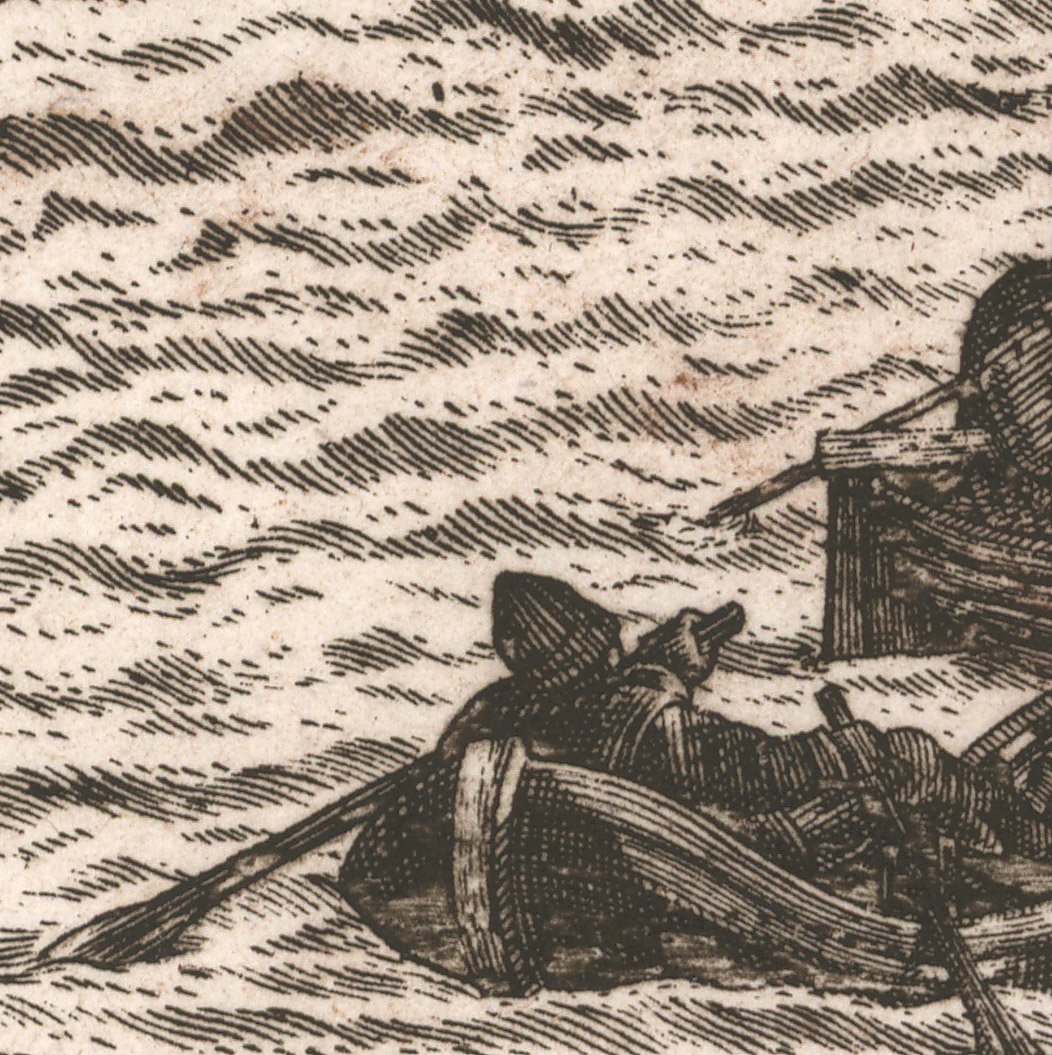
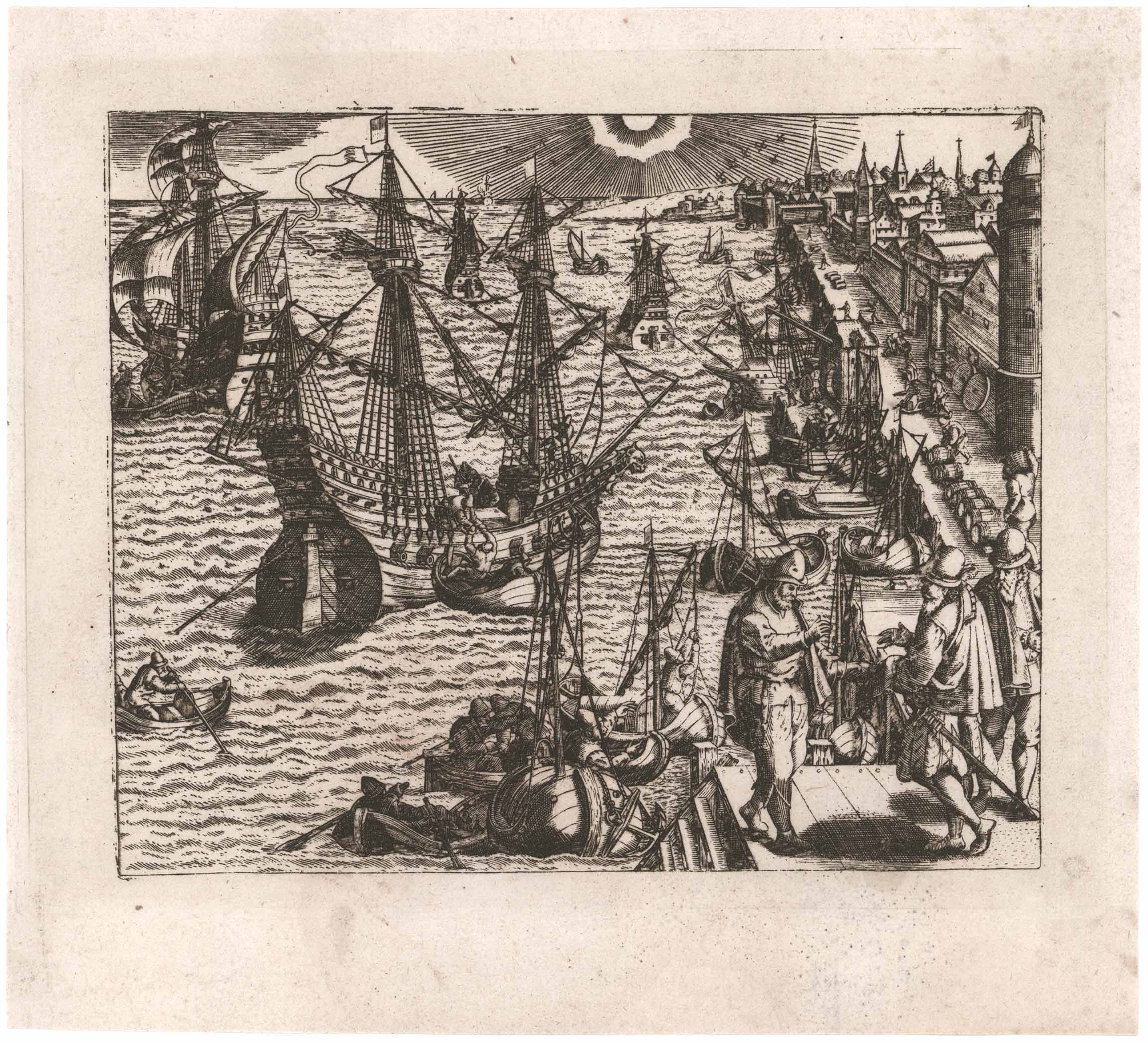
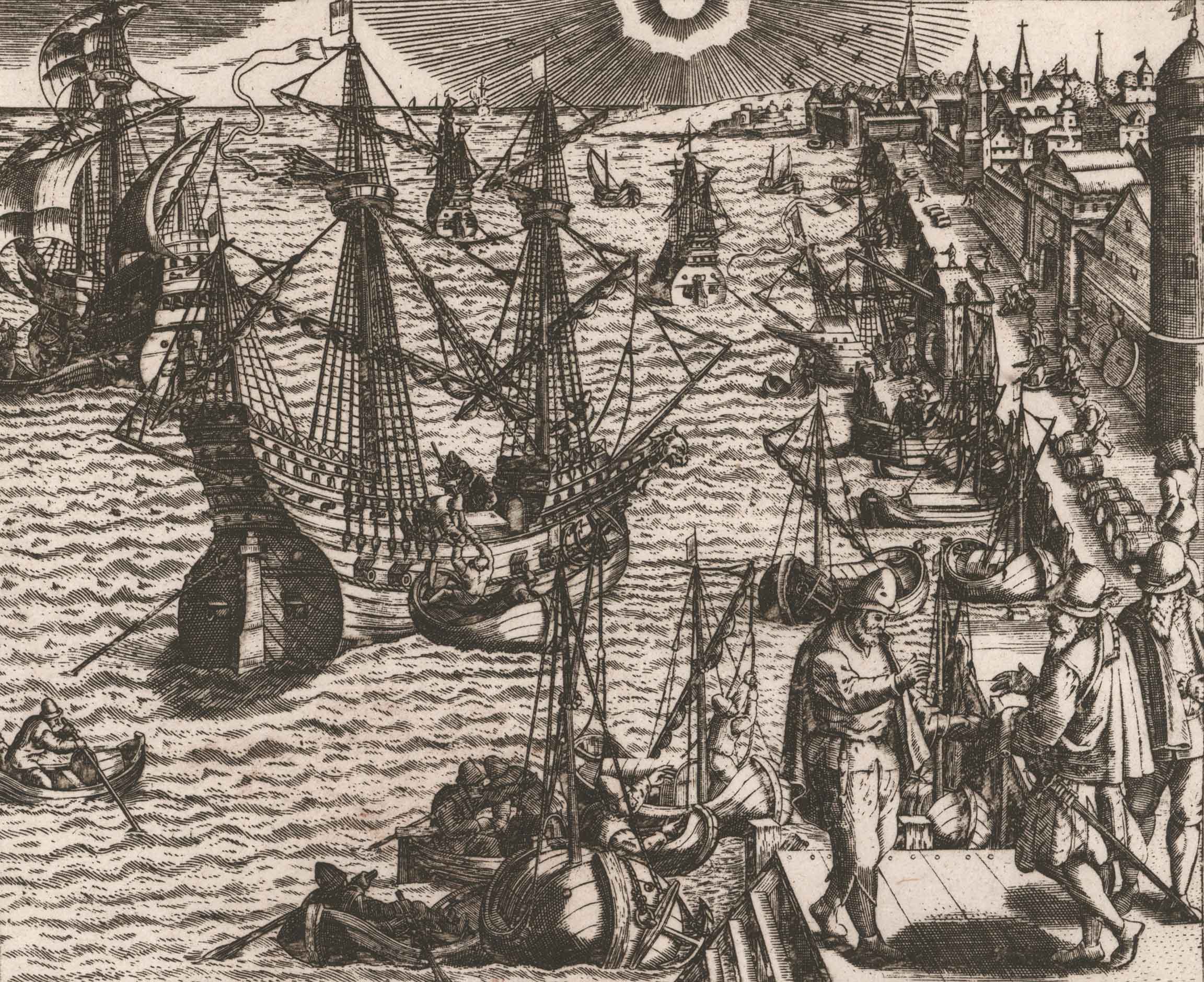
Johann Theodor de Bry’s etching, “The Port of Lisbon”, c1592

Johann Theodor de Bry (aka Jean Théodore de Bry; Jan Dirk de Bry) 1561–1623)

“The Port of Lisbon”, c1592, engraved illustration on page 1 to the third part (of fourteen parts) of Hans Staden’s (c1525–c1576) “Great voyages”, titled: “Americae tertia pars Memorabile[m] provinciae Brasiliae historiam contine[n]s, Germanico primùm sermone scriptam à Ioa[n]ne Stadio Homburgensi Hesso, nunc autem Latinitate donatam à Teucrio Annaeo Priuato Colchanthe Po: & Med” (The third part of America contains the Memorable history of the province of Brazil, first written in German by Joanne Stadio Homburgensi Hesse, but now given in Latin by Teucrio Annaeus Priuato Colchanthe Po: & Med), published in 1592 in Frankfurt-am-Main possibly arranged by Sigismund Feyerabend (aka Sigmund Feyerabend; Sigmund Feierabend; Sigismund Feyrabend) (1528–1590) and later published in 1634 by Matthäus Merian I (aka Matthaeus Merian) (1593–1650).

Archive.org offers an online view of Staden’s publication and the context of this print: https://archive.org/details/americaetertiapa00stad_3/page/1/mode/1up.

The Historical Service of Defence/Department of the Navy (Paris) offers the following description of this print as showing (transl.) “the bank of the Tagus, between the Jardim do Tabaco (Tobacco Garden) and the Terreiro do Paço (Palace Square). We can observe the intense participation of Africans in the many activities that take place in the quay, in particular the operations of loading and unloading of goods, but also their use in navigation tasks, as rowers and especially as sailors. or crew members in Portuguese caravels” (http://histoire-du-portugal.blogspot.com/2014/04/le-port-de-lisbonne-gravure-du-xvieme.html).

Etching printed in umber ink on laid paper with watermark.

Size: (sheet) 21.1 x 23.4 cm; (image borderline) 15.8 x 19 cm.

Condition: a richly inked and well-printed lifetime impression (based on the quality of the line showing no sign of wear to the printing plate) with adequate/good margins in an excellent condition with no tears, holes, folds, abrasions or significant stains.

I am selling this superb etching showing Lisbon’s busy port in the 16th century marking the beginning of Hans Staden’s historically important account of his voyage to Brazil—one memorable experience that made my toes curl in horror was feeling Staden’s shock after finishing a “delicious soup” and discovering “in the bottom of the [soup] cauldron some small skulls, which he later found out to be those of the boys in his choir” (see https://en.wikipedia.org/wiki/Hans_Staden—for the total cost of AU$244 (currently US$163.84/EUR156.33/GBP134.56 at the time of this listing) including Express Mail (EMS) postage and handling to anywhere in the world, but not (of course) any import duties/taxes imposed by some countries.

If you are interested in purchasing this exceptionally rare and historically important early record port activities in the 16th century, please contact me (oz_jim@printsandprinciples.com) and I will send you a PayPal invoice to make the payment easy.

This print has been sold


Thursday, 23 June 2022

Unidentified master from the circle of Nicolaas de Bruyn’s engraving, “The Golden Age”, c1605, after Abraham Bloemaert


Unidentified master from the circle of Nicolaas de Bruyn (1571–1656)

“The Golden Age”, c1605 (or possibly much later following the active date of the publisher [c1763]), published in Paris by Jacques Chéreau (aka le jeune Chéreau) (1688–1776), in reverse to the composition of Nicolaas de Bruyn’s engraving (1604) (see https://www.britishmuseum.org/collection/object/P_1907-1121-4) and in the same direction to the circular composition by Johann Theodor de Bry (aka Jan Dirk de Bry) (1561–1623) (see https://www.britishmuseum.org/collection/object/P_D-7-178) after the preparatory drawing (1603) by Abraham Bloemaert (1564–1651) in the Städelsches Kunstinstitut, Frankfurt (inv.no. 2887) (see https://sammlung.staedelmuseum.de/en/work/the-golden-age).

Engraving on laid paper, trimmed around the platemark (with many small restorations) and backed with a support sheet

Size: (sheet) 48 x 68.9 cm; (image borderline) 44.2 x 68.6 cm.

Lettered in plate within the image borderline: (lower left) “Blomart inuent. Jac Chereau exc.”; (lower right tablet with four lines of Latin text) “Auria Saturno … ferebat opes.”

Lettered in plate below the image borderline in six columns of French text: “Lors que la forte voix …”.

Condition: a strong and well-printed impression, but in a poor condition with age-toning, a flattened centrefold, numerous restored minor tears, replenished small losses and scattered stains. The sheet has been laid upon a support of archival (millennium quality) washi paper.

I am selling this huge masterwork of engraving showing an Arcadian paradise—what the Greek poet, Hesiod, calls “The Golden Age”—where thinly clad folk rest, dance, make music, engage in romance and eat grapes, while children blow bubbles to amuse cats, for AU$688 (currently US$474.58/EUR448.89/GBP387.19 at the time of posting this print) including postage and handling to anywhere in the world, but not (of course) any import duties/taxes imposed by some countries.

If you are interested in purchasing this gigantic engraving of exceptional rarity and incredible beauty, please contact me (oz_jim@printsandprinciples.com) and I will send you a PayPal invoice to make the payment easy.

This print has been sold 


Sunday, 24 May 2020

Robert Boissard’s engravings, “Adamus Lonicerus”; “Heinricus Cornelius Agrippa”; “Franciscus Modius”, 1595–99


Robert Boissard (c.1570–c.1601)
“Adamus Lonicerus”; “Heinricus Cornelius Agrippa”; “Franciscus Modius”, 1595–99, from a series of fifty portraits of luminaries after intermediary drawings by Jean Jacques Boissard (1528/33–1598/1602), published in Frankfurt by Johann Theodor de Bry (1561–1623) and Johann Israel de Bry (1565–1609), printed by Matthaeus Beckerus (fl.1573–1606) in “Icones Virorum Illustrium” (aka “Icones quinquaginta virorum illustrium doctrina & eruditione praestantium ad vivum effictae, cum eorum vitis descriptis a Ian Iac. Boisardo Vesunti” (1597–99).
__________
LEFT
Adamus Lonicerus— (1528–1586) a German physician and botanist (see https://en.wikipedia.org/wiki/Adam_Lonicer).
Engraving on fine laid paper.
Size (sheet) 19.2 x 13.5 cm; (plate) 14.2 x 10.8 cm; (image borderline) 14 x 10.4 cm.
Signed on plate with monogram (R and B intertwined).
Inscribed on plate: (upper arch) “ADAMVS LONICERVS Med. Phijsic’ Francs ad Moenum.”; (tablet) “Nasc. Marpurg. 10 Octob./ Ao. 1528./ Obijt Francs ad Moen’/19 Maÿ, Ao, 1586.”; (text box) “Hebarum Scribis Solerti indagine vires, Nn 4/ est labor, est multæ cognitionis opous, fabr.”
Condition: strong impression with margins. There is a chip to the lower left of the sheet and there is a pencil notation recto and verso otherwise the sheet is in excellent condition.
The engraving in its published context may be viewed on page 304 (text); page 939 (online):
CENTRE
“Heinricus Cornelius Agrippa”— (1486–1535) a German polymath, physician, legal scholar, soldier, theologian, and occult writer (see https://en.wikipedia.org/wiki/Heinrich_Cornelius_Agrippa).
Engraving on fine laid paper.
Size (sheet) 19 x 12.2 cm; (plate) 13.5 x 9.3 cm.
Inscribed on plate: (upper arch) “HEINRICUS CORNELIUS AGRIPPA Med, & IC.EQU.”; (tablet) “Nascitur Colon,/ Agrip,/ Obijt Anno 1538.”; (text box) “Stemmate natus Eques, Medicus Magus atq[ue] Peritus/ Juris et Imperij consul Agrippa fuj. Oo 4”.
Condition: strong impression with margins in excellent condition—there is a pencil note recto and verso from a previous collector.
The engraving in its published context may be viewed on page 196 (text); page 613 (online):
__________
RIGHT
“Franciscus Modius” — (1556–1597) a Bruges Lawyer, humanist, philologist and poet (see https://kalliope-verbund.info/de/eac?eac.id=119064227).
Engraving on fine laid paper.
Size (sheet) 19.1 x 13.7 cm; (plate) 14.4 x 10.8 cm; (image borderline) 14.1 x 10.6 cm.
Inscribed on plate: (upper arch) “FRANCISCUS MODIUS Brugenfis IC. & Pocta”; (tablet) “Nafc Brugs in/ Ao/ Obyt/Ao.”; (text box) “MODIUS hic modium Juris compleverat omnem,/ Quam Vitc modius plenior ante forct./ Kk.3”.
Condition: strong impression with margins in excellent condition—there are pencil notes recto and verso from a previous collector and a spot visible verso only.
The engraving in its published context may be viewed on page 6 (text); page 986 (online):
__________

I am selling this engraved set of three illustrious German men from the 1500s for a total cost of AU$360 (currently US$235.37/EUR215.81/GBP193.47 at the time of this listing) including postage and handling to anywhere in the world.

If you are interested in purchasing these early portrait engravings rarely seen on the art market, please contact me (oz_jim@printsandprinciples.com) and I will send you a PayPal invoice to make the payment easy.

This set of prints has been sold


Sunday, 3 May 2020

Johann Theodor de Bry’s engravings, “Weapon Templates”, c.1590


Johann Theodor de Bry (aka Jan Dirk de Bry) (1561–1623)

Five engravings “Weapon Templates with Helmets and Leaf Tendrils, c.1590 from the series, “Emblemata Saecularia” (Secular Emblems), published by Johan Theodoor and Johan Israel de Bry (c.1565–c.1609) in 1596 in Frankfurt am Main.
Bayerische Staats Bibliothek offers images of many of the pages in “Emblemata Saecularia”:

Engravings on separate sheets of laid paper with small margins and backed upon a single support sheet.
Size of the lower-left engraving (for comparison of sizes): (sheet) 10.9 x 8.7 cm; (plate) 9 x 7.2 cm.

Hollstein Dutch 240–287 (F.W.H. Hollstein 1951, “Dutch and Flemish Etchings, Engravings and Woodcuts 1450–1700: Brun– Coques”, vol. 4, Amsterdam, Menno Hertzberger, p. 38, cat. nos. 240–287).

The Rijksmuseum offers a description of the upper right engraving:

Condition: strong impressions with small margins around the platemarks, laid upon a support sheet of archival (millennium quality) washi paper. There are pencil notations (recto) from an earlier collector below each engraving and the two upper-right prints have marks from use including a replenished chip (virtually invisible) to the left margin of the further right print.

I am selling this exceptionally rare set of five engravings with blank armorial escutcheons, for the total cost of AU$300 (currently US$192.69/EUR175.44/GBP154.23 at the time of this listing) including postage and handling to anywhere in the world (but not, of course, any import duties/taxes imposed by some countries).

If you are interested in purchasing these template designs from the late 1500s, please contact me (oz_jim@printsandprinciples.com) and I will send you a PayPal invoice to make the payment easy.