Saturday, 26 August 2023

Jan Collaert II’s engraving, “Deer Hunt with Bow and Arrow” c.1596, after Jan van der Straet

Jan Collaert II (aka Hans Collaert) (c.1561–c.1620)

“Deer Hunt with Bow and Arrow” (aka “Stag Hunt”), c.1596, after the design by Jan van der Straet (aka Joannes Stradanus; Ioannes Stradanus) (1523–1605), plate 36 from the series of 104 plates, “Venationes Ferarum, Avium, Piscium”, published in Antwerp by Philips Galle (aka Philippe Galle; Philippus Gallaeus) (1537–1612).

Engraving on fine laid paper trimmed with a small margin around the platemark and backed with a support sheet providing wider margins.

Size: (sheet) 21.1 x 28.2 cm; (plate) 20 x 27.2 cm; (image borderline) 18.2 x 27 cm.

Inscribed in plate within the image borderline: (lower left) “Ioan. Stradanus inuent.”; (lower centre) “Ioan. Collaert Sculp. [...] Phls Galle excud.”

Numbered and lettered in plate below the image borderline: (left) “36.”; (centre in two columns of two lines of Latin verse) “Dum cornu Cerui, Iaculator forte Sagittâ;/ Attingit, Muscæ Ceruus morsum putat, atq[ue]// Sublato cornu Scalpit pede: nec mora, telum/ Inter vtrumque pedem prompta volat arte Secundum.”

New Hollstein Dutch 502 (Marjolein Leesberg [comp.] 2008, “Dutch and Flemish Etchings, Engravings and Woodcuts ca. 1450-1700: Cranach–Drusse”, vol. 6, Amsterdam, Sound and Vision, cat. no. 502).

The British Museum offers the following description of this print: “Plate numbered 36, Deer Hunt with Bow and Arrow; in the centre foreground, a deer scratches its ear with its hind hoof; beyond, to the right, a huntsman targets the animal with a bow and arrow; two deer are seen in the mid-ground beyond” (https://www.britishmuseum.org/collection/object/P_1957-0413-65).

Condition: a richly inked and near faultless impression with small margins laid onto a support of archival (millennium quality) washi paper. Beyond a restored tear in the margin at centre and minor darkening in the text area, the sheet is in an excellent condition with no holes, folds, abrasions, significant stains or foxing.

I am selling this magnificent impression—note the strong tonal contrasts and the crisp linework—of a very beautiful engraving showing a stag that has been bitten by a fly (“Muscæ”, based on my reading of the Latin inscription) at a critical moment of distraction for a strike from a Persian hunter with his bow (a “Kaman”), for the total cost of AU$320 (currently US$213.89/EUR193.53/GBP170.36 at the time of posting this listing) including postage and handling to anywhere in the world (but not, of course, any import duties/taxes imposed by some countries).

If you are interested in purchasing this superb engraving executed with great sensitivity and care, please contact me (oz_jim@printsandprinciples.com) and I will send you a PayPal invoice to make the payment easy.

This print has been sold 


Friday, 25 August 2023

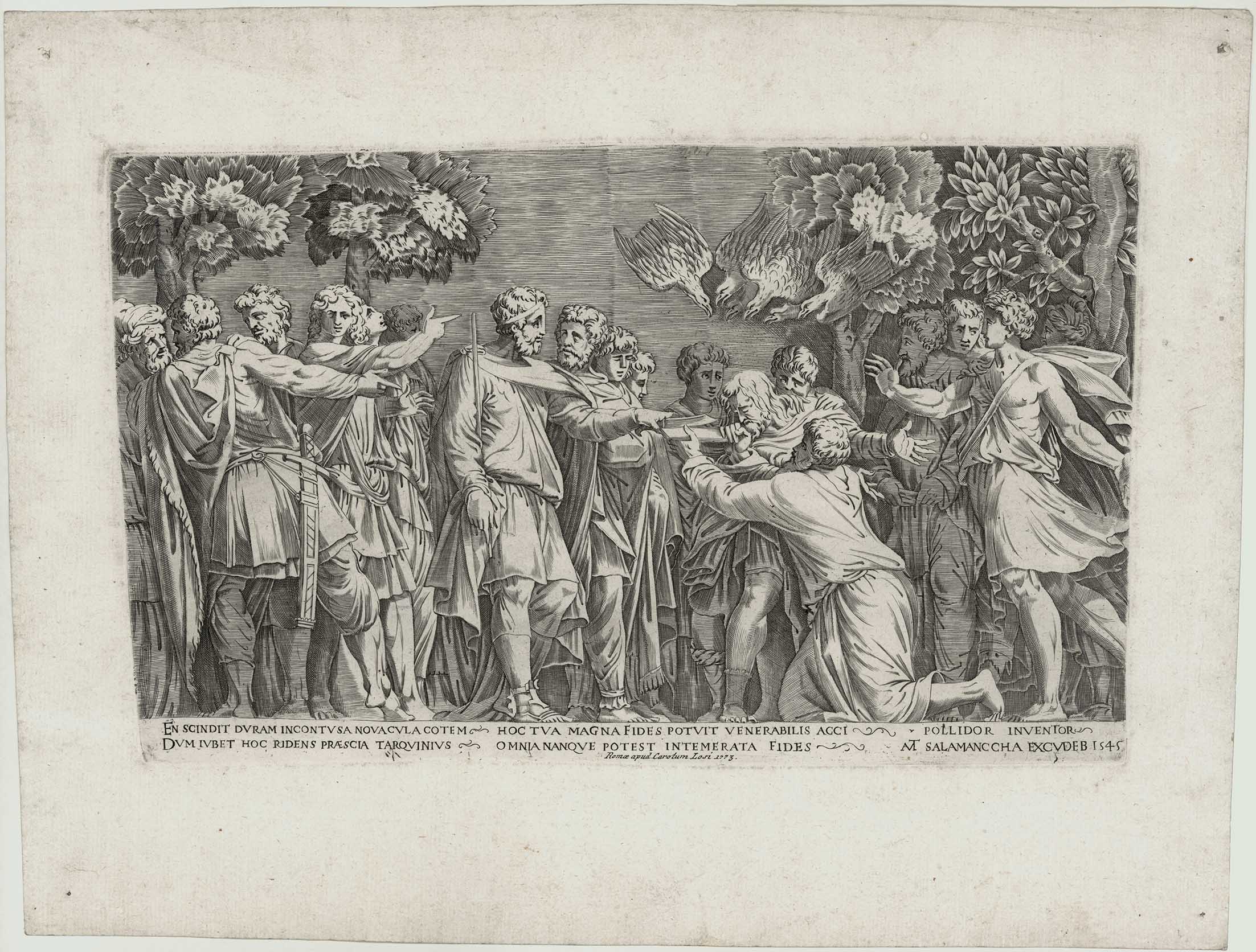
(Attrib.) Michele Lucchese’s engraving, “Tarquinius Priscus Cutting the Whetstone”, 1545, after Polidoro da Caravaggio

(Attrib.) Michele Lucchese (aka Michele Crecchi; Michele Grechi; Michele Greco) (fl.1534–1564), formerly attributed to Nicolas Beatrizet (aka Nicolas Beatricetto) (c.1507–c.1566)

“Tarquinius Priscus Cutting the Whetstone”, 1545, after Polidoro da Caravaggio (aka Polidoro Caldara; Polidoro da Caravagio) (c.1499–1543), possibly relating to a lost façade on Monte Citorio (see the Curator of the BM comment; inv. no. V,8.76), published in Rome by Antonio Salamanca (1478–1562) and later in 1773 (as is the case with this impression) by Carlo Losi (fl.Rome 1757–after 1805).

Engraving on heavy laid paper with wide margins.

Size: (sheet) 36.3 x 47.6 cm; (plate) 24.2 x 40.5 cm; (image borderline) 22.1 x 40.4 cm.

Lettered in plate below the image borderline: “EN SCINDIT DVRAM INCONTVSA NOVA CVLA COTEM ... POLLIDOR INVENTOR/ DVM IVBET HOC … [ANT] SALAMANCCHA EXCVDEB 1545/ Romæ apud Carolum Losi 1773.”

State ii (of ii) with the addition of the publication details for Carlo Losi.

Mariette I, p. 257 (as Caldara); Passavant 119 (as Beatrizet); Bianchi D 14 (attributed to Beatrizet).

See also the description of this print offered by the British Museum: https://www.britishmuseum.org/collection/object/P_1871-0429-615.

Condition: a strong and well-printed impression with wide margins. Beyond a pinhole in each corner of the margin and minor surface dustiness, the sheet is in an excellent condition with no tears, losses, abrasions, significant stains or foxing.

I am selling this rare engraving for AU$376 (currently US$251.32/EUR227.39/GBP200.17 at the time of posting this listing) including postage and handling to anywhere in the world (but not, of course, any import duties/taxes imposed by some countries).

If you are interested in purchasing this strong impression showing at left-of-centre, Tarquinius Priscus—by tradition, the fifth king of Rome (reigning between c.616–578 BC)—slicing through a whetstone (tool sharpener) with his knife to demonstrate his divine power, contact me (oz_jim@printsandprinciples.com) and I will send you a PayPal invoice to make the payment easy.

Note that I have previously listed another engraving by Michele Lucchese, “The Martyrdom of St. Lawrence” (c.1520), after Marcantonio Raimondi (and Baccio Bandinelli) that is currently still available: https://www.printsandprinciples.com/2017/02/luccheses-engraving-1539-after.html.

This print has been sold


Thursday, 24 August 2023

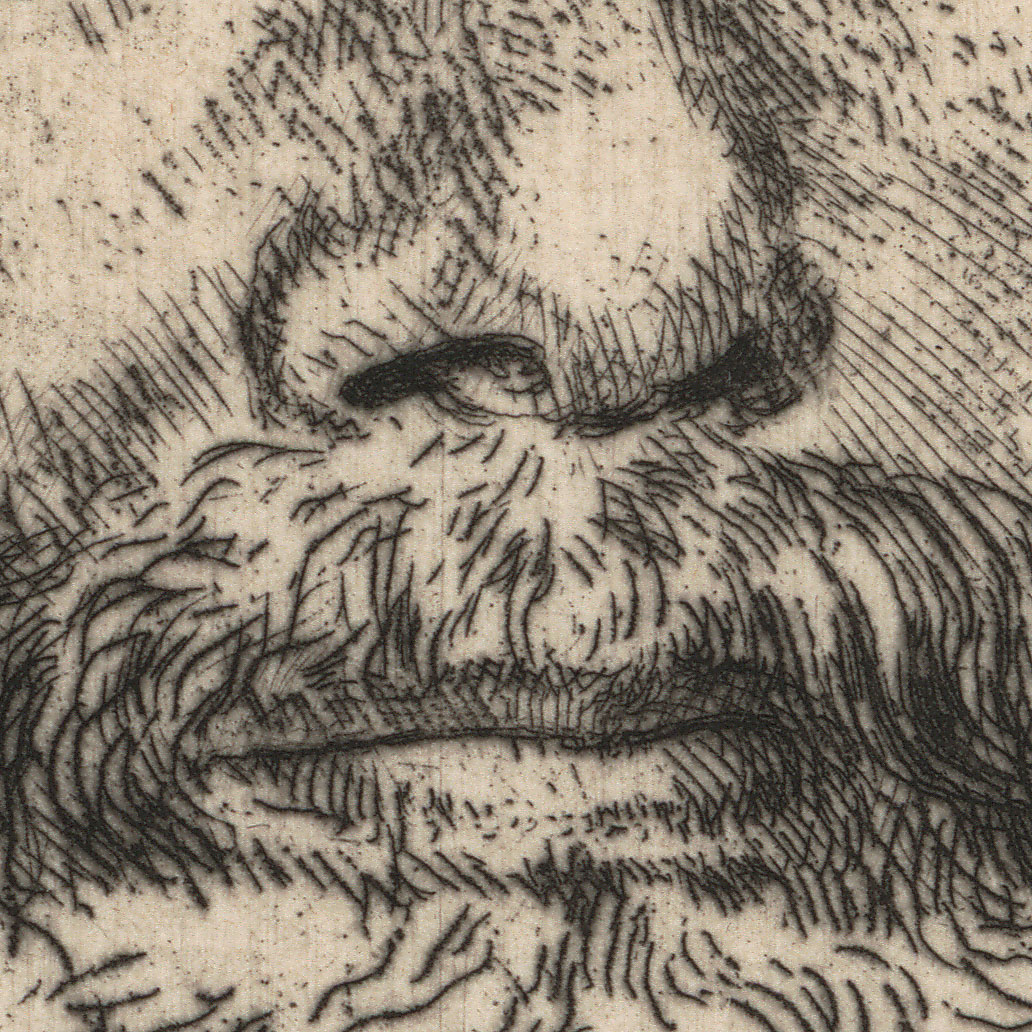
Augustus John’s etching, “Benjamin Waugh”, c.1906

Augustus John (aka Augustus Edwin John) (1878–1961)

“Benjamin Waugh” (founder of the charity, National Society for the Prevention of Cruelty to Children), c.1906, published in 1906 (but executed earlier), number 11 in an edition of 25 impressions, published by C. Chenil & Co in 1906, and pencil signed by the artist at lower right. Note that this impression is inscribed in pencil at lower left, “Plate no. 85”, from what Dodgson (1920) advises were catalogue numbers recorded by Jack Knewstub (founder of the Chenil Gallery and the brother-in-law of both William Orpen and William Rothenstein) “during the winter of 1905/6” in a “haphazard” manner “…as they [the plates/prints] were found by the artist and handed over, and these numbers bear no relation to the order of production or to any other principle of arrangement” (p. viii).

Etching with plate tone on cream laid paper (watermark “GC & Co”), signed in plate and in pencil. The lower edge of the sheet has pencil inscriptions by an unidentified hand (Jack Knewstub's?) showing the plate number, edition number and title of the print.

Size: (sheet [uneven edges]) 29.1 x 23 cm; (plate) 16.3 x 15 cm.

Inscribed in the plate at right: “John” and pencil-signed by the artist below the platemark at right.

Dodgson 23 (Campbell Dodgson 1920, “A Catalogue of Etchings by Auguste John 1901–1914”, London, Charles Chenil & Co., p. 28, cat. no. 23).

See also the description of this print offered by the British Museum and a preparatory drawing (c.1898) held by the National Portrait Gallery (London):  https://www.britishmuseum.org/collection/object/P_1949-0411-1185 & https://www.npg.org.uk/collections/search/portrait/mw57888/Benjamin-Waugh.

Condition: a strong and near faultless impression with margins as published. There are remnants of mounting tape along the top edge and the lower margin has pencil notations (including the artist signature). The sheet is in an excellent condition with no tears, holes, folds, abrasions, significant stains or foxing.

I am selling this ultra-beautiful and ultra-rare pencil-signed etching—described in Dodgson’s (1920) catalogue raisonné as being of “special excellence” (p. vii)—for AU$1324 (currently US$884.96/EUR800.71/GBP704.85 at the time of posting this listing) including postage and handling to anywhere in the world (but not, of course, any import duties/taxes imposed by some countries).

If you are interested in purchasing this early portrait by Augustus John—interestingly, I understand that the plate tone served the purpose of mitigating the effect of the accumulation of minor damages from when the plate was first inscribed to when it was finally printed (see Dodgson [1920, p. ix])—please contact me (oz_jim@printsandprinciples.com) and I will send you a PayPal invoice to make the payment easy.

This print has been sold 


Wednesday, 23 August 2023

Mortimer Menpes’ drypoint, “Musée de Cluny”, c.1908

Mortimer Menpes (aka Mortimer Luddington Menpes) (1855–1938)

“Musée de Cluny” (title as first exhibited), 1907–08, showing the “façade of the Cluny Museum in Paris … from the Cluny Gardens” (Morgan [2012] p. 160) printed by the artist in an edition of 50 impressions and signed in pencil below the platemark at lower right, “Mortimer Menpes imp”, and with Menpes’ inventory number inscribed in pencil at lower left corner, “131”.

Drypoint with surface tone on buff-coloured wove (Japan?) paper. Note that Morgan (2012) advises: “All known impressions on antique laid paper” (p. 160); nevertheless, I can see no chain-lines of laid paper in the sheet. The sheet has restorations and has been backed with a support sheet providing wider margins.

Size: (irregularly cut sheet) 34.3 x 47 cm; (plate) 30.3 x 41 cm.

Lifetime impression of the only state.

Morgan 335 (Gary Morgan 2012, “The Etched Works of Mortimer Menpes [1855–1938]”, vol. 2 [“Etchings, 1901–1913”], Adelaide, Stuart Galleries, p. 160, cat. no. 335 [Menpes’ inventory number: 131).

Condition: a richly inked and skilfully wiped impression, laid upon an archival support sheet of millennium quality washi paper. There is a restored tear in the upper left and the upper-left corner of the margin has been restored along with other fractures in the margin and there is a thumbprint (of the artist?) in the lower left corner.

I am selling this magnificent, pencil-signed drypoint that is one of Menpes’ largest prints and very rare—only 50 impressions were made—for AU$604 (currently US$403.71/EUR365.28/GBP321.55 at the time of posting this listing) including postage and handling to anywhere in the world (but not, of course, any import duties/taxes imposed by some countries).

If you are interested in purchasing this major drypoint showing Menpes’ admiration for his friend, James McNeill Whistler, in the insightful wiping of a plate to add drama and mood/atmosphere—note that this print was executed only four years before Menpes wrote his book “Whistler as I knew him” (London 1904)—please contact me (oz_jim@printsandprinciples.com) and I will send you a PayPal invoice to make the payment easy.

This print has been sold


Tuesday, 22 August 2023

Frank Laing’s etching with drypoint, “Paysage en Tirée-Ecosse”, c.1900

Frank Laing (aka Francis James Laing) (1862–1907)—a Scottish painter and printmaker famous for his stylistic leaning towards (and I understand his correspondence with) James McNeill Whistler.

“Paysage en Tirée-Ecosse” (MIA title) (Landscape in Tiree–Scotland)—note that this title may be incorrect and is based on the Minneapolis Institute of Art’s description of an etching by Laing that does not include a image to verify my proposal (see https://collections.artsmia.org/art/46960/paysage-en-tiree-ecosse-frank-laing); nevertheless, the MIA’s print is a similar size and the plate is inscribed with the word “Tiree” at lower right, c.1900.

Etching and drypoint on Japan paper printed in bistre coloured ink, backed with a support sheet, signed in pencil by the artist with partially legible pencil notations at lower left corner with what may be a reference number to a catalogue (“N. 13”). The pencil notations also have a reference number (“No. 8989”) that may relate to the collector, Jules Chavasse (Lugt 1430; see https://www.britishmuseum.org/collection/term/BIOG22648) whose collection this print belonged before it was sold in Paris, 6 June 1919.

Size: (sheet) 32.1 x 50.3 cm; (plate) 22.9 x 33.5 cm.

For those who may be unfamiliar with this extraordinary artist—mindful that his prints are seldom seen on the art market—the following extract from Roger Marx’s article, “L’Exposition des Eaux-Fortes de M. Frank Laing”, published in “La Gazette des Beaux-Arts” (January 1899, pp. 65–6) may be interesting: (transl.) “Mr. Frank Laing's manner unites, in a personal synthesis, the 'velvety vigour' of Seymour Haden to the nervous and refined subtlety of Whistler; the memory of the expressive abbreviations of Jongkind (in the treatment of the clouds and especially the trees) can still be usefully invoked. This is to what masters Mr. Frank Laing is akin. Isn't such a thing enough filiation to determine the rank which belongs to this painter-engraver, unquestionably one of the most gifted of the new generation?” (p. 66; PDF available in the sidebar at https://digi.ub.uni-heidelberg.de/diglit/gba1899_1/0073/image,info).

Condition: a richly inked impression in a near pristine condition with no tears, holes, folds, significant stains or foxing, laid upon an archival support sheet of millennium quality washi paper.

I am selling this exceptionally rare, pencil-signed and large etching by an esteemed Scottish artist, for AU$308 (currently US$205.87/EUR186.27/GBP163.97 at the time of posting this listing) including postage and handling to anywhere in the world (but not, of course, any import duties/taxes imposed by some countries).

If you are interested in purchasing this very beautiful etching with drypoint—my eye is drawn to the freely laid marks describing subtle changes to the contours of the distant headland and the almost minimal (certainly reserved) treatment of the clouds—please contact me (oz_jim@printsandprinciples.com) and I will send you a PayPal invoice to make the payment easy.