Showing posts with label Burgkmair (Hans). Show all posts

Tuesday, 6 February 2024

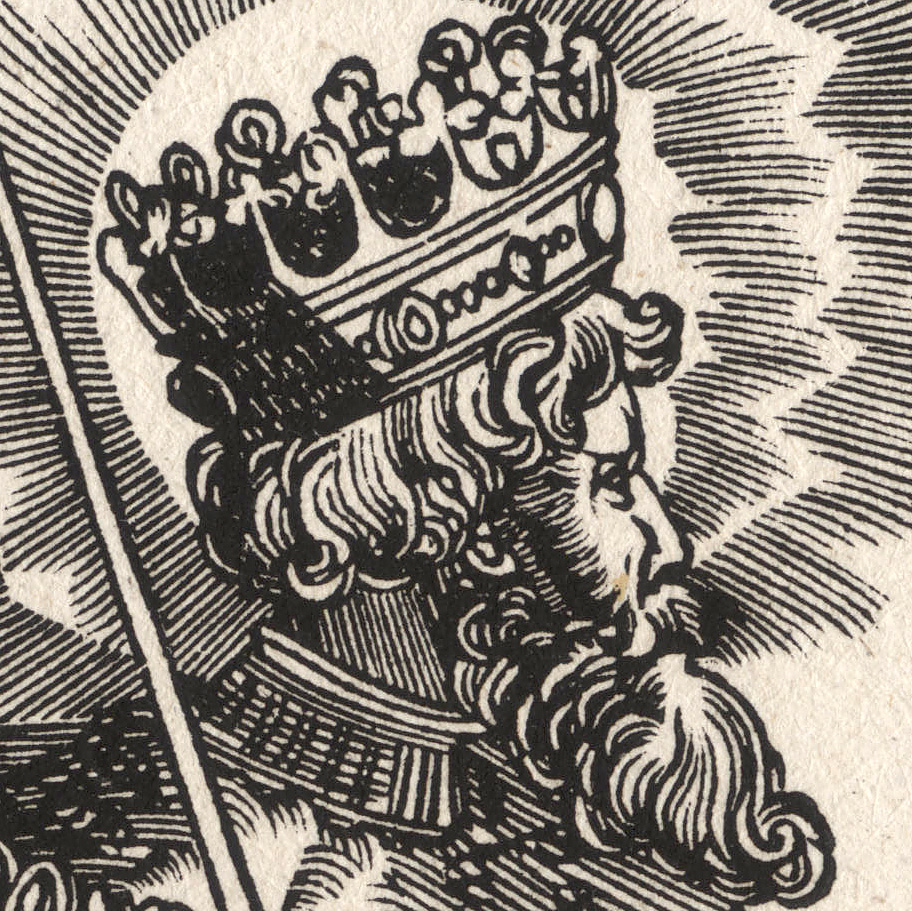
Leonhard Beck’s woodcut, “Saint Tharsitia”, 1510, after Hans Burgkmair the Elder

Leonhard Beck (1475/80–1542)

Saint Tharsitia”, 1510, plate 104 from the series of woodcuts after the designs of Hans Burgkmair the Elder (1473–1531), “Images De Saints Et Saintes Issus De La Famille De L'Empereur Maximilien I. - En une Suite de cent dix neuf planches gravées en bois par differens graveurs d'après les dessins de Hans Burgmaier.” (see https://www.royalacademy.org.uk/art-artists/book/images-de-saints-et-saintes-issus-de-la-famille-de-lempereur-maximilien-i), plate cut by the workshop of Nicolas Seemann ((fl.1510–1517), Hans Frank, Corneille Liefrink (1480–pre1545), Aléxis Lindt (fl. c1500–1525), Josse de Neghker (1485–c1544), Wolfgang Resch (c1480–c1537) and Hans Taberith (fl. c1510–1517) and Guilleaume Taberith, published in “Saints Connected with the House of Hapsburg: A General Account of the Ancestry of Emperor Maximilian I”.

This impression is from the later edition printed by Anna Alberti (fl.1794-1802) and published by Franz Xaver Stöckl (1763–1815) in Vienna in 1799 using the original woodblock (see Virtuelles Kupferstichkabinett: http://diglib.hab.de?grafik=xd-2f-100-00103). The Annex Galleries advises that this edition “was printed in 1799 for the family of the Emperor Maximilian I by Chez La Veuve Alberti, the widow of the printer Ignaz Alberti and published by F.X. Stockl, Marchand D'Estamps in Vienna” (https://www.annexgalleries.com/inventory/detail/17678).

Woodcut on fine laid paper (with watermark) with full margins as published.

Size: (sheet) 42 x 28.5 cm; (image borderline) 23.7 x 21cm.

Numbered above the image borderline: (right) “104”.

Regarding the shield shown on the right featuring a rampant lion, I may be very wrong, but to my eyes this particular lion seems to match the one featured in the coat-of-arms of The Ancient Kingdom of Neustria (see https://www.sovereign-order.uk/kingdom-of-neustria). For me, this makes sense, as the St Tharsitia was the granddaughter of the Frankish king, Clotaire I.

Condition: a richly inked and superbly printed impression with generously wide margins in a near pristine condition. Note that the fine white line showing on the left is possibly a crack in the printing plate as it may be seen in other Franz Xaver Stöckl impressions of this print.

I am selling this large and superb woodcut, printed from the original 1510 plate in the Franz Xaver Stöckl edition of 1799, for the total cost of AU$278 (currently US$181.08/EUR168.37/GBP144.26 at the time of this listing) including postage and handling to anywhere in the world, but not (of course) any import duties/taxes imposed by some countries.

If you are interested in purchasing this startlingly fine woodcut showing St Tharsitia (aka St Tarsicia) (died c.600) addressing an emaciated man—possibly a plague victim based on his shroud-like covering—who has raised himself from a stretcher bed, please contact me (oz_jim@printsandprinciples.com) and I will send you a PayPal invoice to make the payment easy.


Sunday, 28 May 2023

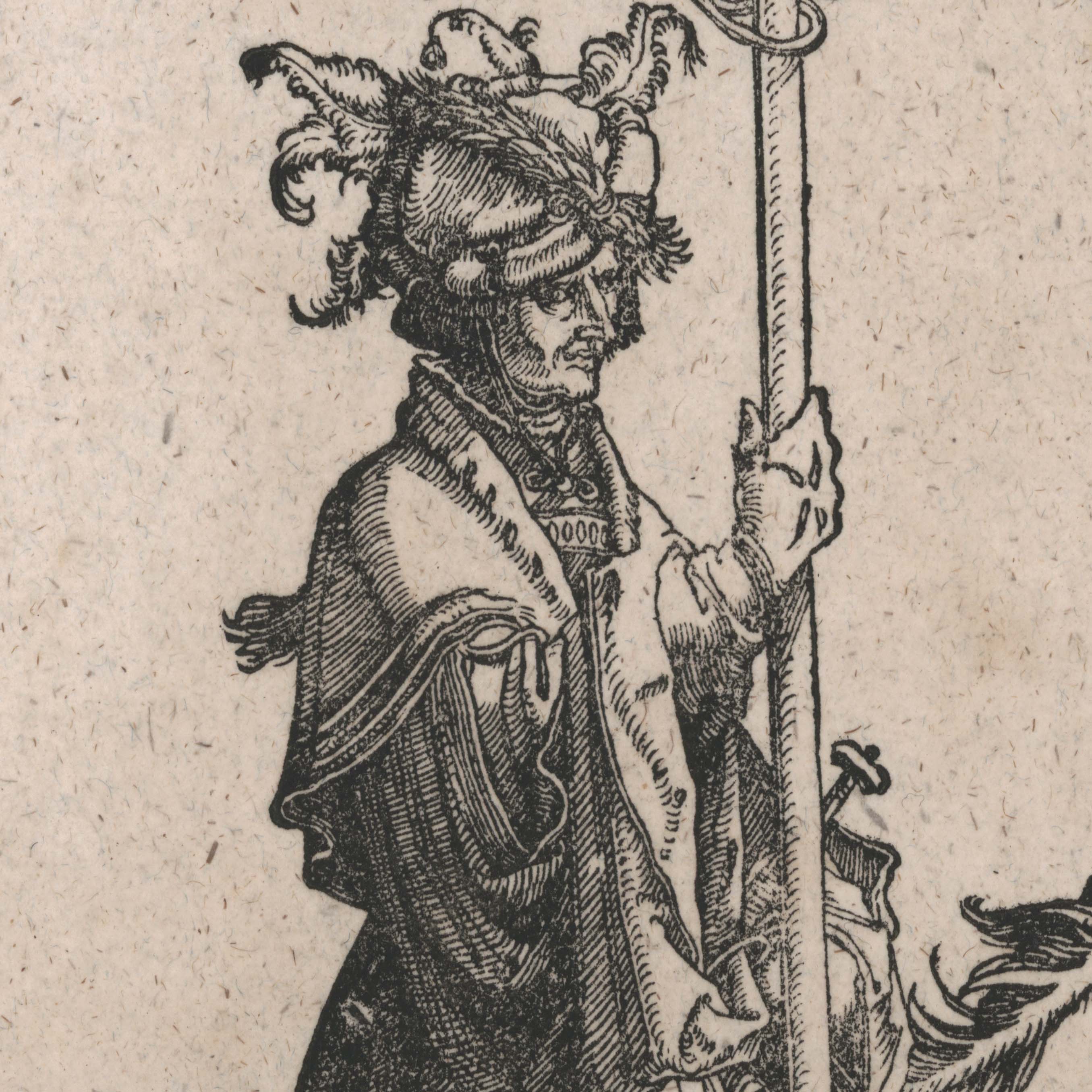
Hans Burgkmair the Elder’s woodcut, “From an Embarrassing Question”, c1520

Hans Burgkmair the Elder (1473–1531)

“From an Embarrassing Question” (“Von Peinlicher frage” [letterpress text above the image]), c1520, woodcut published in Frankfurt in 1550 by Christian Egenolph (1502–1555) as an illustration to page 169 (CLXIX) of Justin Gobler’s (1503/4–1567) “Der Rechten Spiegel Auß den beschribenen Geystlichem, Weltlichen, Natürlichem, vnd andern gebreuchlichen Rechten...“ (read this book online at https://play.google.com/store/books/details?id=PzpeAAAAcAAJ&rdid=book-PzpeAAAAcAAJ&rdot=1).

For those with sensitive spirits, the paragraph below is explanatory information of the portrayed subject and may not be necessary to read.

From what I understand, the scene is set in the torture chamber of Slovakia’s Spis Castle (Spišský hrad) (see https://commons.wikimedia.org/wiki/File:Spisska_Hrad_048.jpg). The portrayed subject on the left, shows the Sicilian tyrant of Akragas (Agrigent), Phalaris (c570–555 BC) roasting the designer of the Bronze Bull, the sculptor Perillos, as a way of seeing this hideous torture device in use for the first time—note that a part of the design principle to this device is that the bronze bull would cast a bellowing sound as steam escapes its nostrils… dreadful! In the foreground may be seen a victim on the torture device known as “the rack” and adding more horror to the victim plight as his limbs are slowly dislocated, he is force-fed water—a torture known as “waterboarding”. In the background at left, a torture victim is raised with his hands secured behind his back and dropped to dislocate his shoulders—a torture known as the “strappado”.

Woodcut with letterpress text on laid paper trimmed with a small margin around the image borderline and backed with a support sheet.

Size: (sheet) 16.8 x 17.5 cm; (image borderline) 14.6 x 15.6 cm.

Letterpress text printed above the image borderline: (centre) “Von Peinlicher frage”.

Condition: a strong and well-printed early impression showing little or no sign of wear to the printing plate. There is a restored nick in the upper edge of the sheet, otherwise, it is in an excellent condition and laid upon an archival support sheet of millennium quality washi paper.

I am selling this historically significant woodcut from the Renaissance showing various torture devices of the time, for AU$264 (currently US$176.46/EUR159.66/GBP140.54 at the time of listing this print) including postage and handling to anywhere in the world (but not, of course, any import duties/taxes imposed by some countries).

If you are interested in purchasing this rare and important (but grim in what is portrayed) woodcut, please contact me (oz_jim@printsandprinciples.com) and I will send you a PayPal invoice to make the payment easy.

This print has been sold


Saturday, 27 May 2023

Hans Burgkmair the Elder’s woodcut, “Knights Bearing the Banners of Unterwaldsee, Oberwaldsee and Duino”, c1517

Hans Burgkmair the Elder (1473–1531) or possibly by/or with assistance from Albrecht Altdorfer (1482/5–1538) based on the numbering on the upper right (see the V&A description of this print: https://collections.vam.ac.uk/item/O675713/triumph-of-the-emperor-maximilian-woodcut-maximilian-i-holy/).  

“Knights Bearing the Banners of Unterwaldsee, Oberwaldsee and Duino”, c1517, a giant woodcut from the frieze of 139 plates extending to around 54 meters in length titled, “Triumphal Procession of Emperor Maximilian I”, c1517. This impression may be from the 1777 edition of 192 plates published by Adam Bartsch (1757–1821).

The Victoria and Albert Museum offers the following very interesting information about the “Triumphal Procession of Emperor Maximilian I” plates: … “This was one of three large-scale mural projects which together reflected Emperor Maximilian I's (1459-1519) status as Holy Roman Emperor and linked him symbolically with ancient Rome. The project was not finished by the time of Maximilian's death but the set was published later, in 1526.

Hans Burgkmair designed much of the procession, begun in about 1512, with contributions from Albrecht Altdorfer, Hans Springinklee, Hans Beck and Hans Scheufelein. The designs were cut by Jost de Negker's large team of block-cutters.

The two other mural projects include a large Triumphal Arch, about 12 feet high by 10 feet wide and made up of 192 blocks, and a Triumphal Carriage about 8 feet long made up of 8 blocks. These were designed by Albrecht Dürer, with assistance from Hans Springinklee, Wolf Traut and Albrecht Altdorfer.

The procession was not intended for sale. The city of Nuremberg apologised to the Emperor for some impressions from the blocks having been sold. The friezes were intended as gifts for wall display. According to surviving correspondence, Maximilian wanted the procession to 'grace the walls of council chambers and great halls of the empire, proclaiming for posterity the noble aims of their erstwhile ruler'” (http://collections.vam.ac.uk/item/O972804).

Woodcut printed in black on fine buff coloured laid paper (with watermark) backed with a support sheet.

Size: (sheet) 40 X 40.2 cm.

Letterpress numbered at upper right corner: “73”.

TIB 11.73 (Tilman Falk [ed.] 1980, “The Illustrated Bartsch: Sixteenth Century German Artists”, vol. 11, New York, Abaris Books, p. 173, cat. no. 73); Bartsch 73; Schestag 73; Winzinger 215.

Condition: a strong and well-printed impression in excellent condition for its considerable age and laid upon an archival support sheet of millennium quality washi paper.

I am selling this extraordinarily large woodcut from the Renaissance—note that close examination of the print shows the matrix of smaller blocks joined together to create this huge print—for AU$430 (currently US$287.41/EUR260.05/GBP228.92 at the time of listing this print) including postage and handling to anywhere in the world (but not, of course, any import duties/taxes imposed by some countries).

If you are interested in purchasing this exceptionally rare woodcut, please contact me (oz_jim@printsandprinciples.com) and I will send you a PayPal invoice to make the payment easy.

This print has been sold


Tuesday, 21 September 2021

Leonhard Beck’s woodcut, “St. Amalberga III”, 1510, after Hans Burgkmair the Elder

Leonhard Beck (1475/80–1542)

St. Amalberga III” (aka “St Amelia III”),1510, plate 9 from the series of woodcuts after the designs of Hans Burgkmair the Elder (1473–1531), “Images De Saints Et Saintes Issus De La Famille De L'Empereur Maximilien I. - En une Suite de cent dix neuf planches gravées en bois par differens graveurs d'après les dessins de Hans Burgmaier.” (see https://www.royalacademy.org.uk/art-artists/book/images-de-saints-et-saintes-issus-de-la-famille-de-lempereur-maximilien-i), plate cut by the workshop of Nicolas Seemann ((fl.1510–1517), Hans Frank, Corneille Liefrink (1480–pre1545), Aléxis Lindt (fl. c1500–1525), Josse de Neghker (1485–c1544), Wolfgang Resch (c1480–c1537) and Hans Taberith (fl. c1510–1517) and Guilleaume Taberith, published in “Saints Connected with the House of Hapsburg: A General Account of the Ancestry of Emperor Maximilian I”.

This impression is from the later edition printed by Anna Alberti (fl.1794-1802) and published by Franz Xaver Stöckl (1763–1815) in Vienna in 1799 using the original woodblocks (see Virtuelles Kupferstichkabinett: http://www.virtuelles-kupferstichkabinett.de/de/detail-view). The Annex Galleries advises that this edition “was printed in 1799 for the family of the Emperor Maximilian I by Chez La Veuve Alberti, the widow of the printer Ignaz Alberti and published by F.X. Stockl, Marchand D'Estamps in Vienna” (https://www.annexgalleries.com/inventory/detail/17678).

Woodcut on laid paper with wide margins.

Size: (sheet) 37 x 26.3 cm; (image borderline) 23.7 x 21cm.

Numbered above the image borderline: (right) “9”.

New Hollstein (Leonhard Beck) 10 (Guido Messling [comp.] 2007, “The New Hollstein: Dutch and Flemish Etchings, Engravings and Woodcuts 1450–1700: Leonhard Beck”, Part I, Ouderkerk aan den Ijssel, Sound and Vision, p. 6, cat. no. 10).

For those unfamiliar with St. Amalbergna III, her biography is confusingly smudged with two earlier saints who share the same name (St Amalbergna) and the same birthday (July 10). What is known about St. Amalbergna III was that she was a virgin from the 12th century. What is certain regarding the portrayed saint in this woodcut, this is not the first St Amalberga who was married twice, comforts those with arm pains, bruises, and fever, and is usually shown standing on a giant sturgeon—a fish which the saint jumped upon to cross a river (see https://www.catholicnewsagency.com/saint/st-amalberga-297).

Regarding the shield on the right featuring rampant lions, I may be very wrong, but to my eyes this particular lion seems to match those featured in the Coat of Arms of Flanders (https://en.wikipedia.org/wiki/Coat_of_arms_of_Flanders). For me, this makes sense, as the first St Amalberga was the sweetheart of Charlemagne, King of the Franks—until he broke her arm when making a rather forceful marriage proposal—and because she forgave him and made him a better man, she is revered in Belgium for comforting those with arm pains (see https://www.catholic.org/saints/saint.php?saint_id=1300).

Condition: a richly inked and superbly printed impression with generously wide margins in near pristine condition with no tears, holes, abrasions, creases, significant stains, foxing or signs of handling.

I am selling this large and superb woodcut, printed from the original 1510 plate in the Franz Xaver Stöckl edition of 1799, for the total cost of AU$263 (currently US$190.80/EUR162.72/GBP139.73 at the time of this listing) including postage and handling to anywhere in the world, but not (of course) any import duties/taxes imposed by some countries.

If you are interested in purchasing this startlingly fine woodcut showing St. Amalberga III as a nun praying to a holy vision of the crucifix on a sacred heart in what I assume to be Flanders with the Rampant Lion Coat of Arms of that region on the right, please contact me (oz_jim@printsandprinciples.com) and I will send you a PayPal invoice to make the payment easy.


Monday, 28 June 2021

Leonhard Beck’s woodcut, “St. Lucius”, 1510

Leonhard Beck (1475/80–1542)

St. Lucius” (aka “Pope Lucius I”), 1510, plate 71 from the series of woodcuts after the designs of Hans Burgkmair the Elder (1473–1531), “Images De Saints Et Saintes Issus De La Famille De L'Empereur Maximilien I. - En une Suite de cent dix neuf planches gravées en bois par differens graveurs d'après les dessins de Hans Burgmaier.” (see https://www.royalacademy.org.uk/art-artists/book/images-de-saints-et-saintes-issus-de-la-famille-de-lempereur-maximilien-i), plate cut by Nicolas Seemann ((fl.1510–1517) and published in “Saints Connected with the House of Hapsburg: A General Account of the Ancestry of Emperor Maximilian I”.

This impression is from the later edition printed by Anna Alberti (fl.1794-1802) and published by Franz Xaver Stöckl (1763–1815) in Vienna in 1799 using the original woodblocks (see Virtuelles Kupferstichkabinett: http://diglib.hab.de?grafik=xd-2f-100-00070). The Annex Galleries advises that this edition “was printed in 1799 for the family of the Emperor Maximilian I by Chez La Veuve Alberti, the widow of the printer Ignaz Alberti and published by F.X. Stockl, Marchand D'Estamps in Vienna” (https://www.annexgalleries.com/inventory/detail/17678).

Woodcut on laid paper with wide margins and stitch binding holes on left.

Size: (sheet) 41.5 x 29 cm; (image borderline) 23.7 x 21cm.

Numbered above the image borderline: (right) “71”.

New Hollstein (Leonhard Beck) 68 (Guido Messling [comp.] 2007, “The New Hollstein: Dutch and Flemish Etchings, Engravings and Woodcuts 1450–1700: Leonhard Beck”, Part I, Ouderkerk aan den Ijssel, Sound and Vision, p. 18, cat. no. 68).

For those unfamiliar with St. Lucius, I recommend reading the account offered by the Kulturstrøget website: https://web.archive.org/web/20150924092105/http://www.roskildekommune.dk/webtop/site.aspx?p=21421. Regarding the image shown in the woodcut, I believe—and I may be very wrong—that the building shown in the distance may be Roskilde Cathedral, as I understand that St. Lucius is its patron saint. The devil-like figure on the collapasing column may be a reference to the “vile demon” who interrupted the journey of the priests entrusted to bring the skiull relic of the saint to the cathedral by “demanding human sacrifice.” Fortunately, the priest holding the saint’s skull washed it and the demon disappeared into the sea after letting out a “sickening yell.”

Condition: a richly inked and superbly printed impression with generously wide margins in excellent condition with no tears, holes (beyond the stitch binding holes on the left edge), creases, abrasions, significant stains or foxing.

I am selling this large and superb woodcut, printed from the original 1510 plate in the later (1799) Franz Xaver Stöckl edition, for the total cost of AU$263 (currently US$198.91/EUR166.75/GBP143.37 at the time of this listing) including postage and handling to anywhere in the world, but not (of course) any import duties/taxes imposed by some countries.

If you are interested in purchasing this startlingly fine woodcut showing St. Lucius dismissing a demon falling from a breaking column, please contact me (oz_jim@printsandprinciples.com) and I will send you a PayPal invoice to make the payment easy.