Showing posts with label Stöckl (Franz Xaver). Show all posts

Tuesday, 6 February 2024

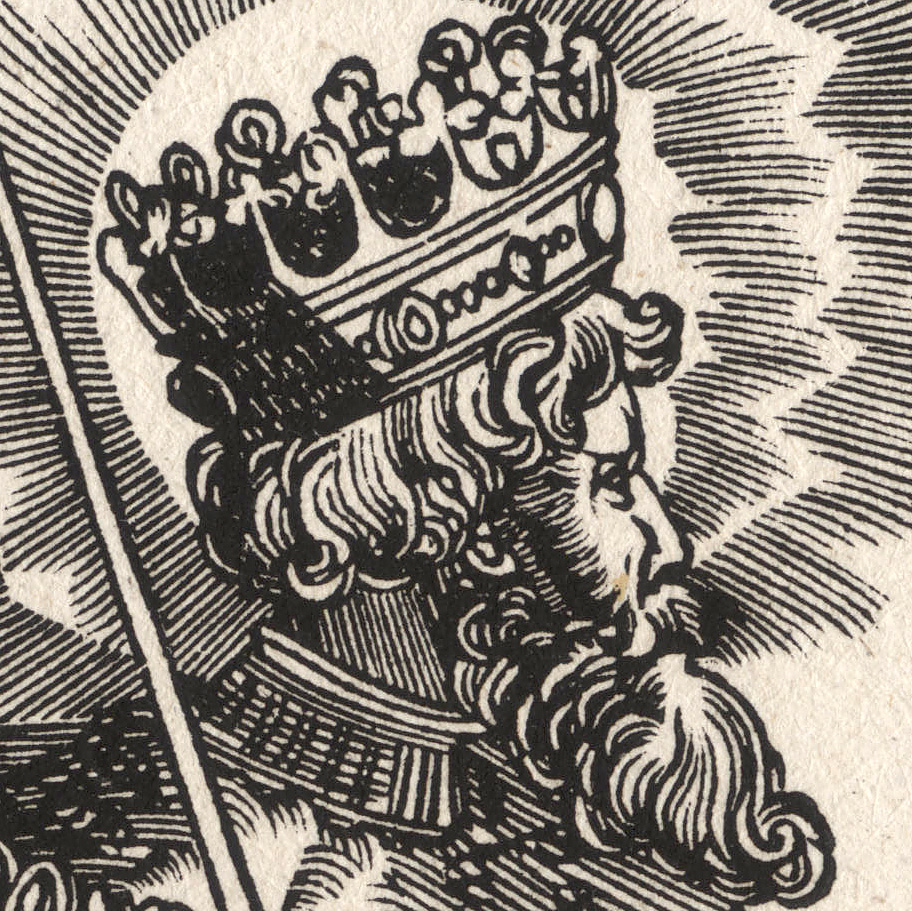
Leonhard Beck’s woodcut, “Saint Tharsitia”, 1510, after Hans Burgkmair the Elder

Leonhard Beck (1475/80–1542)

Saint Tharsitia”, 1510, plate 104 from the series of woodcuts after the designs of Hans Burgkmair the Elder (1473–1531), “Images De Saints Et Saintes Issus De La Famille De L'Empereur Maximilien I. - En une Suite de cent dix neuf planches gravées en bois par differens graveurs d'après les dessins de Hans Burgmaier.” (see https://www.royalacademy.org.uk/art-artists/book/images-de-saints-et-saintes-issus-de-la-famille-de-lempereur-maximilien-i), plate cut by the workshop of Nicolas Seemann ((fl.1510–1517), Hans Frank, Corneille Liefrink (1480–pre1545), Aléxis Lindt (fl. c1500–1525), Josse de Neghker (1485–c1544), Wolfgang Resch (c1480–c1537) and Hans Taberith (fl. c1510–1517) and Guilleaume Taberith, published in “Saints Connected with the House of Hapsburg: A General Account of the Ancestry of Emperor Maximilian I”.

This impression is from the later edition printed by Anna Alberti (fl.1794-1802) and published by Franz Xaver Stöckl (1763–1815) in Vienna in 1799 using the original woodblock (see Virtuelles Kupferstichkabinett: http://diglib.hab.de?grafik=xd-2f-100-00103). The Annex Galleries advises that this edition “was printed in 1799 for the family of the Emperor Maximilian I by Chez La Veuve Alberti, the widow of the printer Ignaz Alberti and published by F.X. Stockl, Marchand D'Estamps in Vienna” (https://www.annexgalleries.com/inventory/detail/17678).

Woodcut on fine laid paper (with watermark) with full margins as published.

Size: (sheet) 42 x 28.5 cm; (image borderline) 23.7 x 21cm.

Numbered above the image borderline: (right) “104”.

Regarding the shield shown on the right featuring a rampant lion, I may be very wrong, but to my eyes this particular lion seems to match the one featured in the coat-of-arms of The Ancient Kingdom of Neustria (see https://www.sovereign-order.uk/kingdom-of-neustria). For me, this makes sense, as the St Tharsitia was the granddaughter of the Frankish king, Clotaire I.

Condition: a richly inked and superbly printed impression with generously wide margins in a near pristine condition. Note that the fine white line showing on the left is possibly a crack in the printing plate as it may be seen in other Franz Xaver Stöckl impressions of this print.

I am selling this large and superb woodcut, printed from the original 1510 plate in the Franz Xaver Stöckl edition of 1799, for the total cost of AU$278 (currently US$181.08/EUR168.37/GBP144.26 at the time of this listing) including postage and handling to anywhere in the world, but not (of course) any import duties/taxes imposed by some countries.

If you are interested in purchasing this startlingly fine woodcut showing St Tharsitia (aka St Tarsicia) (died c.600) addressing an emaciated man—possibly a plague victim based on his shroud-like covering—who has raised himself from a stretcher bed, please contact me (oz_jim@printsandprinciples.com) and I will send you a PayPal invoice to make the payment easy.


Tuesday, 21 September 2021

Leonhard Beck’s woodcut, “St. Amalberga III”, 1510, after Hans Burgkmair the Elder

Leonhard Beck (1475/80–1542)

St. Amalberga III” (aka “St Amelia III”),1510, plate 9 from the series of woodcuts after the designs of Hans Burgkmair the Elder (1473–1531), “Images De Saints Et Saintes Issus De La Famille De L'Empereur Maximilien I. - En une Suite de cent dix neuf planches gravées en bois par differens graveurs d'après les dessins de Hans Burgmaier.” (see https://www.royalacademy.org.uk/art-artists/book/images-de-saints-et-saintes-issus-de-la-famille-de-lempereur-maximilien-i), plate cut by the workshop of Nicolas Seemann ((fl.1510–1517), Hans Frank, Corneille Liefrink (1480–pre1545), Aléxis Lindt (fl. c1500–1525), Josse de Neghker (1485–c1544), Wolfgang Resch (c1480–c1537) and Hans Taberith (fl. c1510–1517) and Guilleaume Taberith, published in “Saints Connected with the House of Hapsburg: A General Account of the Ancestry of Emperor Maximilian I”.

This impression is from the later edition printed by Anna Alberti (fl.1794-1802) and published by Franz Xaver Stöckl (1763–1815) in Vienna in 1799 using the original woodblocks (see Virtuelles Kupferstichkabinett: http://www.virtuelles-kupferstichkabinett.de/de/detail-view). The Annex Galleries advises that this edition “was printed in 1799 for the family of the Emperor Maximilian I by Chez La Veuve Alberti, the widow of the printer Ignaz Alberti and published by F.X. Stockl, Marchand D'Estamps in Vienna” (https://www.annexgalleries.com/inventory/detail/17678).

Woodcut on laid paper with wide margins.

Size: (sheet) 37 x 26.3 cm; (image borderline) 23.7 x 21cm.

Numbered above the image borderline: (right) “9”.

New Hollstein (Leonhard Beck) 10 (Guido Messling [comp.] 2007, “The New Hollstein: Dutch and Flemish Etchings, Engravings and Woodcuts 1450–1700: Leonhard Beck”, Part I, Ouderkerk aan den Ijssel, Sound and Vision, p. 6, cat. no. 10).

For those unfamiliar with St. Amalbergna III, her biography is confusingly smudged with two earlier saints who share the same name (St Amalbergna) and the same birthday (July 10). What is known about St. Amalbergna III was that she was a virgin from the 12th century. What is certain regarding the portrayed saint in this woodcut, this is not the first St Amalberga who was married twice, comforts those with arm pains, bruises, and fever, and is usually shown standing on a giant sturgeon—a fish which the saint jumped upon to cross a river (see https://www.catholicnewsagency.com/saint/st-amalberga-297).

Regarding the shield on the right featuring rampant lions, I may be very wrong, but to my eyes this particular lion seems to match those featured in the Coat of Arms of Flanders (https://en.wikipedia.org/wiki/Coat_of_arms_of_Flanders). For me, this makes sense, as the first St Amalberga was the sweetheart of Charlemagne, King of the Franks—until he broke her arm when making a rather forceful marriage proposal—and because she forgave him and made him a better man, she is revered in Belgium for comforting those with arm pains (see https://www.catholic.org/saints/saint.php?saint_id=1300).

Condition: a richly inked and superbly printed impression with generously wide margins in near pristine condition with no tears, holes, abrasions, creases, significant stains, foxing or signs of handling.

I am selling this large and superb woodcut, printed from the original 1510 plate in the Franz Xaver Stöckl edition of 1799, for the total cost of AU$263 (currently US$190.80/EUR162.72/GBP139.73 at the time of this listing) including postage and handling to anywhere in the world, but not (of course) any import duties/taxes imposed by some countries.

If you are interested in purchasing this startlingly fine woodcut showing St. Amalberga III as a nun praying to a holy vision of the crucifix on a sacred heart in what I assume to be Flanders with the Rampant Lion Coat of Arms of that region on the right, please contact me (oz_jim@printsandprinciples.com) and I will send you a PayPal invoice to make the payment easy.


Monday, 28 June 2021

Leonhard Beck’s woodcut, “St. Lucius”, 1510

Leonhard Beck (1475/80–1542)

St. Lucius” (aka “Pope Lucius I”), 1510, plate 71 from the series of woodcuts after the designs of Hans Burgkmair the Elder (1473–1531), “Images De Saints Et Saintes Issus De La Famille De L'Empereur Maximilien I. - En une Suite de cent dix neuf planches gravées en bois par differens graveurs d'après les dessins de Hans Burgmaier.” (see https://www.royalacademy.org.uk/art-artists/book/images-de-saints-et-saintes-issus-de-la-famille-de-lempereur-maximilien-i), plate cut by Nicolas Seemann ((fl.1510–1517) and published in “Saints Connected with the House of Hapsburg: A General Account of the Ancestry of Emperor Maximilian I”.

This impression is from the later edition printed by Anna Alberti (fl.1794-1802) and published by Franz Xaver Stöckl (1763–1815) in Vienna in 1799 using the original woodblocks (see Virtuelles Kupferstichkabinett: http://diglib.hab.de?grafik=xd-2f-100-00070). The Annex Galleries advises that this edition “was printed in 1799 for the family of the Emperor Maximilian I by Chez La Veuve Alberti, the widow of the printer Ignaz Alberti and published by F.X. Stockl, Marchand D'Estamps in Vienna” (https://www.annexgalleries.com/inventory/detail/17678).

Woodcut on laid paper with wide margins and stitch binding holes on left.

Size: (sheet) 41.5 x 29 cm; (image borderline) 23.7 x 21cm.

Numbered above the image borderline: (right) “71”.

New Hollstein (Leonhard Beck) 68 (Guido Messling [comp.] 2007, “The New Hollstein: Dutch and Flemish Etchings, Engravings and Woodcuts 1450–1700: Leonhard Beck”, Part I, Ouderkerk aan den Ijssel, Sound and Vision, p. 18, cat. no. 68).

For those unfamiliar with St. Lucius, I recommend reading the account offered by the Kulturstrøget website: https://web.archive.org/web/20150924092105/http://www.roskildekommune.dk/webtop/site.aspx?p=21421. Regarding the image shown in the woodcut, I believe—and I may be very wrong—that the building shown in the distance may be Roskilde Cathedral, as I understand that St. Lucius is its patron saint. The devil-like figure on the collapasing column may be a reference to the “vile demon” who interrupted the journey of the priests entrusted to bring the skiull relic of the saint to the cathedral by “demanding human sacrifice.” Fortunately, the priest holding the saint’s skull washed it and the demon disappeared into the sea after letting out a “sickening yell.”

Condition: a richly inked and superbly printed impression with generously wide margins in excellent condition with no tears, holes (beyond the stitch binding holes on the left edge), creases, abrasions, significant stains or foxing.

I am selling this large and superb woodcut, printed from the original 1510 plate in the later (1799) Franz Xaver Stöckl edition, for the total cost of AU$263 (currently US$198.91/EUR166.75/GBP143.37 at the time of this listing) including postage and handling to anywhere in the world, but not (of course) any import duties/taxes imposed by some countries.

If you are interested in purchasing this startlingly fine woodcut showing St. Lucius dismissing a demon falling from a breaking column, please contact me (oz_jim@printsandprinciples.com) and I will send you a PayPal invoice to make the payment easy.


Friday, 4 June 2021

Leonhard Beck’s woodcut, “St. Eadmundus I”, 1510/18

Leonhard Beck (1475/80–1542)

St. Eadmundus I” (aka “Sanctus. Radmundus”; “Edmund of Anglia”; St Eadmund, King of East Anglia; “St Edmund the Martyr”)1510/18, plate 29 from the series of 87 woodcuts, “Saints connected with the House of Habsburg”, plate cut by Wolfgang Resch (fl.c.1508–1537) and published in “Saints Connected with the House of Hapsburg: A General Account of the Ancestry of Emperor Maximilian I”.

For those who may be unfamiliar with St. Eadmundus I, the British Museum offers the following biographical details: “King of East Anglia and Christian martyr. Believed to have been crowned in 855. Defeated by the Danes led by Ubbe Ragnarsson and Ivar the Boneless, he was executed after, it is said, having refused to renounce Christ. Canonized during the 10th century” (https://www.britishmuseum.org/collection/term/BIOG169551).

This impression is from the later edition printed by Anna Alberti (fl.1794-1802) and published by Franz Xaver Stöckl (1763–1815) in Vienna in 1799 using the original woodblocks (see http://diglib.hab.de?grafik=xd-2f-100-00028 and http://www.virtuelles-kupferstichkabinett.de/ —search using the name “Stöckl”).

Woodcut on laid paper with full wide margins and stitch binding holes on left as published.

Size: (sheet) 41.5 x 29.4 cm; (image borderline) 23.8 x 20.8 cm.

Numbered above the image borderline: (right) “29”.

New Hollstein (Leonhard Beck) 25 (Guido Messling [comp.] 2007, “The New Hollstein: Dutch and Flemish Etchings, Engravings and Woodcuts 1450–1700: Leonhard Beck”, Part I, Ouderkerk aan den Ijssel, Sound and Vision, p. 9, cat. no. 25).

The British Museum offers the following description of this print:

“St Radmundus (Edmund of Anglia?); standing outside a church, holding a sceptre in his left hand and giving money to a beggar with his right; on the church a coat-of-arms; in a volume with modern binding containing 87 woodcuts from the series of Habsburg saints, from the first edition without text. 1518 Woodcut” (https://www.britishmuseum.org/collection/object/P_1865-0610-324).

Condition: a richly inked and superbly printed impression with generously wide margins in excellent condition with no tears, holes (beyond the stitch binding holes on the left edge), creases, abrasions, significant stains or foxing.

I am selling this large and superb woodcut, printed from the original 1510 plate for the Franz Xaver Stöckl 1799 edition, for the total cost of AU$263 (currently US$201.64/EUR166.40/GBP142.85 at the time of this listing) including postage and handling to anywhere in the world, but not (of course) any import duties/taxes imposed by some countries.

If you are interested in purchasing this startlingly fine woodcut showing the saintly King of East Anglia giving alms to a beggar, please contact me (oz_jim@printsandprinciples.com) and I will send you a PayPal invoice to make the payment easy.

This print has been sold


Wednesday, 19 May 2021

Leonhard Beck’s woodcut, “St Richarda”, 1510

Leonhard Beck (1475/80–1542)

St. Richarda(aka “St Richardis of Swabia”; “St. Richarde”), 1510, plate 90 from the series of woodcuts, “Saints connected with the House of Habsburg”, plate cut by Claus Seman (1480–1542) and published in “Saints Connected with the House of Hapsburg: A General Account of the Ancestry of Emperor Maximilian I”.

For those who may be unfamiliar with St. Richarda, according to the website “Pilgrim: Early Western Saints” (https://pyhiinvaeltaja.wordpress.com/2010/10/01/st-richardis/), Richarda was the “wife of Charles the Fat, king of France and Italy, and emperor.” Sadly, Charles the Fat became delusional after suffering excruciating head pains and accused his wife of having an affair with the Bishop of Vercelli. To prove her innocence, St. Richarda submitted to trial by ordeal. Again, from the “Pilgrim” website: “The trial consisted of the accused being wrapped in linen cloth soaked with inflammable liquid and set on fire at the four corners. It was burnt away to nothing, and the innocent queen remained unhurt. Thus was her innocence proved.” After the ordeal, Empress Richarda divorced Charles the Fat and retired to a monastery she had built. I understand her body is now in the monastery of Andlau where the preserved body of St. Lazarus rests.

This impression is from the later edition printed by Anna Alberti (fl.1794-1802) and published by Franz Xaver Stöckl (1763–1815) in Vienna in 1799 using the original woodblocks (see http://www.virtuelles-kupferstichkabinett.de/ —search using the name “Stöckl”).

Woodcut on watermarked laid paper with full wide margins and stitch binding holes on left as published.

Size: (sheet) 41.5 x 29 cm; (image borderline) 23.7 x 21cm.

Numbered in above the image borderline: (right) “90”.

New Hollstein (Leonhard Beck) 88 (Guido Messling [comp.] 2007, “The New Hollstein: Dutch and Flemish Etchings, Engravings and Woodcuts 1450–1700: Leonhard Beck”, Part I, Ouderkerk aan den Ijssel, Sound and Vision, p. 22, cat. no. 88).

Condition: a richly inked and superbly printed impression with generously wide margins in excellent condition with no tears, holes (beyond the stitch binding holes on the left edge), creases, abrasions, significant stains or foxing.

I am selling this large and superb woodcut, printed from the original 1510 plate in the later 1799 Franz Xaver Stöckl edition, for the total cost of AU$263 (currently US$203.90/EUR166.81/GBP143.83 at the time of this listing) including Express Mail (EMS) postage and handling to anywhere in the world, but not (of course) any import duties/taxes imposed by some countries.

If you are interested in purchasing this startlingly fine woodcut showing St Richarda enduring the ordeal of a trial by fire to prove her innocence after her husband, King Charles the Fat, accused her of adultery, please contact me (oz_jim@printsandprinciples.com) and I will send you a PayPal invoice to make the payment easy.

This print has been sold