Showing posts with label Feyrabend (Sigismund ). Show all posts

Monday, 5 December 2022

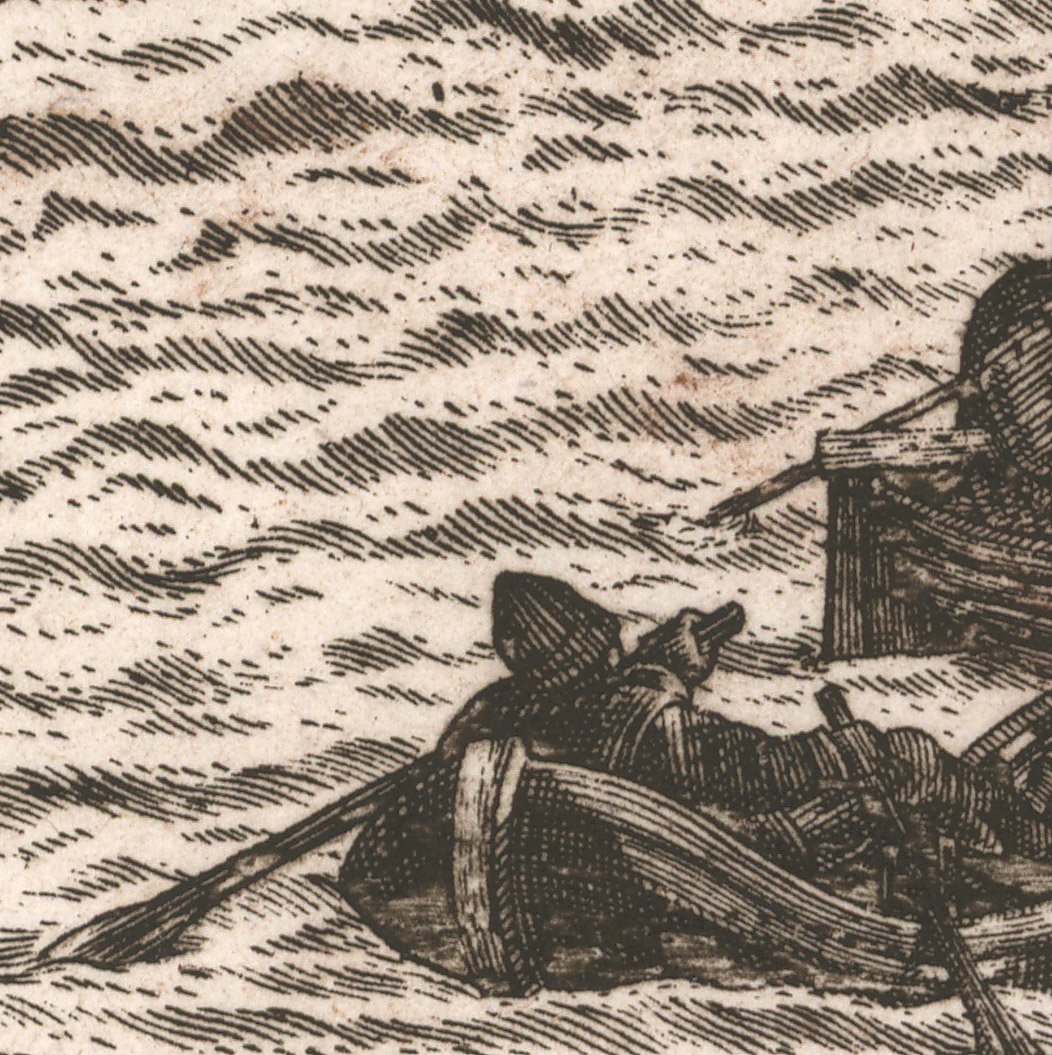
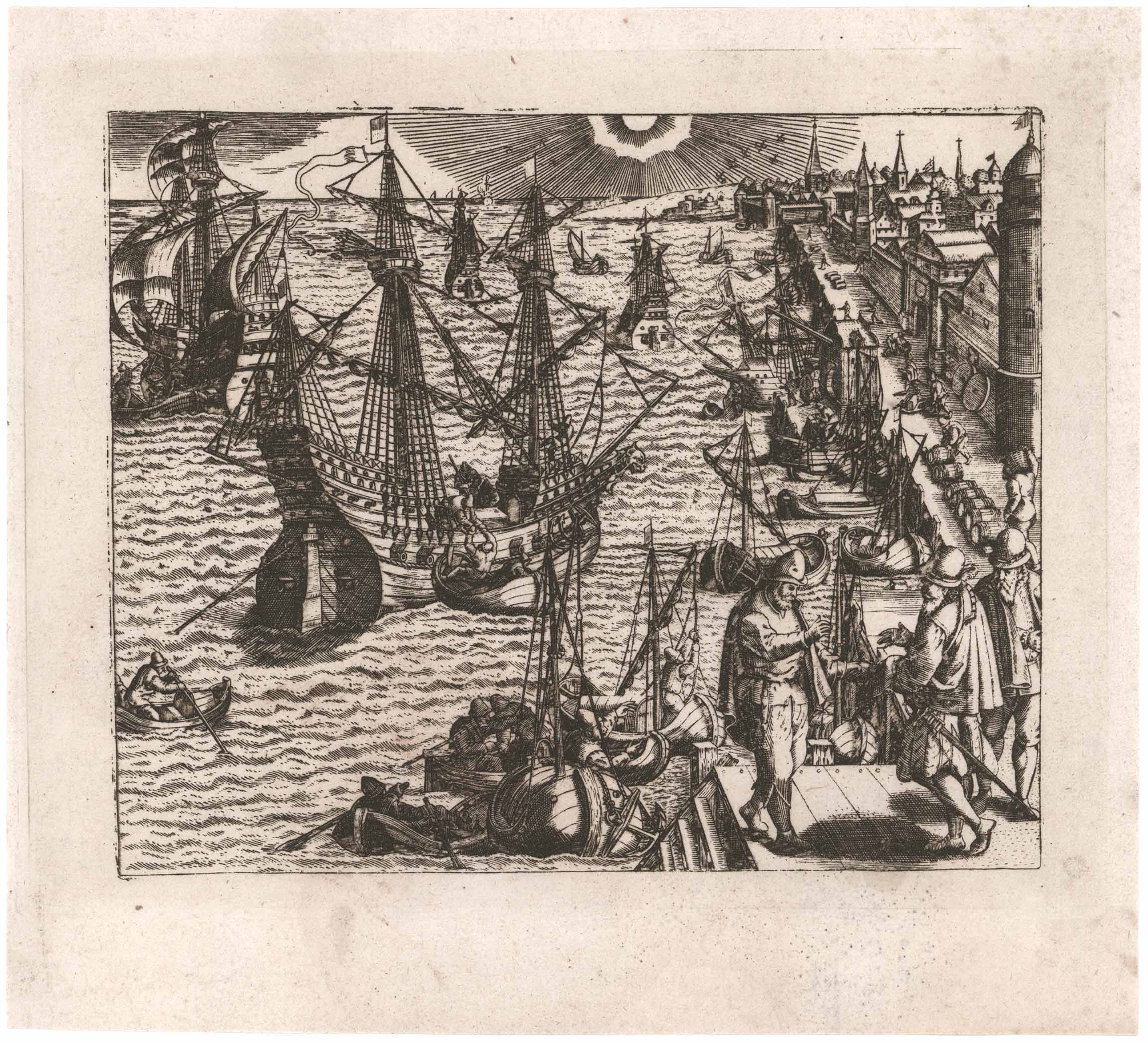
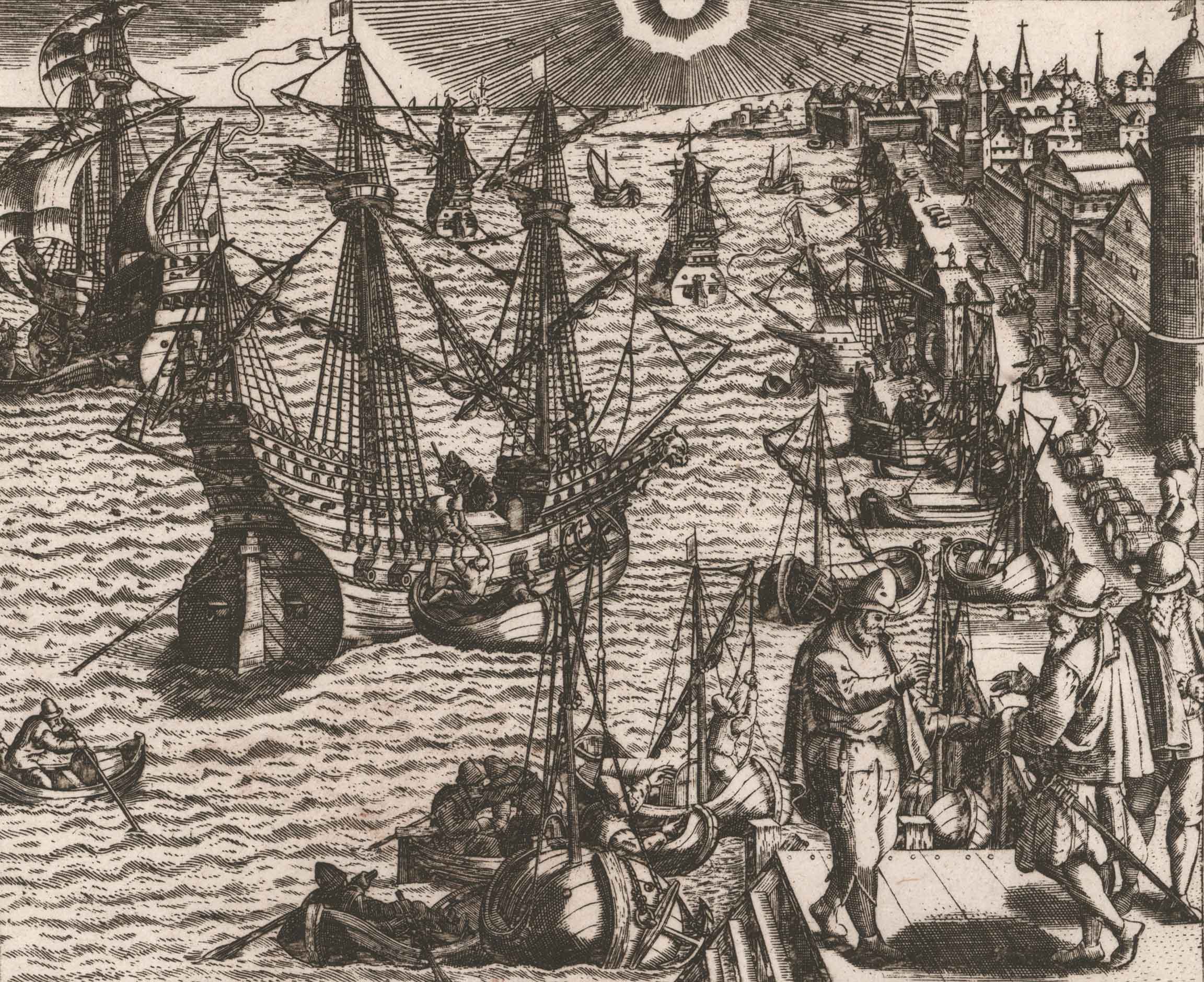
Johann Theodor de Bry’s etching, “The Port of Lisbon”, c1592

Johann Theodor de Bry (aka Jean Théodore de Bry; Jan Dirk de Bry) 1561–1623)

“The Port of Lisbon”, c1592, engraved illustration on page 1 to the third part (of fourteen parts) of Hans Staden’s (c1525–c1576) “Great voyages”, titled: “Americae tertia pars Memorabile[m] provinciae Brasiliae historiam contine[n]s, Germanico primùm sermone scriptam à Ioa[n]ne Stadio Homburgensi Hesso, nunc autem Latinitate donatam à Teucrio Annaeo Priuato Colchanthe Po: & Med” (The third part of America contains the Memorable history of the province of Brazil, first written in German by Joanne Stadio Homburgensi Hesse, but now given in Latin by Teucrio Annaeus Priuato Colchanthe Po: & Med), published in 1592 in Frankfurt-am-Main possibly arranged by Sigismund Feyerabend (aka Sigmund Feyerabend; Sigmund Feierabend; Sigismund Feyrabend) (1528–1590) and later published in 1634 by Matthäus Merian I (aka Matthaeus Merian) (1593–1650).

Archive.org offers an online view of Staden’s publication and the context of this print: https://archive.org/details/americaetertiapa00stad_3/page/1/mode/1up.

The Historical Service of Defence/Department of the Navy (Paris) offers the following description of this print as showing (transl.) “the bank of the Tagus, between the Jardim do Tabaco (Tobacco Garden) and the Terreiro do Paço (Palace Square). We can observe the intense participation of Africans in the many activities that take place in the quay, in particular the operations of loading and unloading of goods, but also their use in navigation tasks, as rowers and especially as sailors. or crew members in Portuguese caravels” (http://histoire-du-portugal.blogspot.com/2014/04/le-port-de-lisbonne-gravure-du-xvieme.html).

Etching printed in umber ink on laid paper with watermark.

Size: (sheet) 21.1 x 23.4 cm; (image borderline) 15.8 x 19 cm.

Condition: a richly inked and well-printed lifetime impression (based on the quality of the line showing no sign of wear to the printing plate) with adequate/good margins in an excellent condition with no tears, holes, folds, abrasions or significant stains.

I am selling this superb etching showing Lisbon’s busy port in the 16th century marking the beginning of Hans Staden’s historically important account of his voyage to Brazil—one memorable experience that made my toes curl in horror was feeling Staden’s shock after finishing a “delicious soup” and discovering “in the bottom of the [soup] cauldron some small skulls, which he later found out to be those of the boys in his choir” (see https://en.wikipedia.org/wiki/Hans_Staden—for the total cost of AU$244 (currently US$163.84/EUR156.33/GBP134.56 at the time of this listing) including Express Mail (EMS) postage and handling to anywhere in the world, but not (of course) any import duties/taxes imposed by some countries.

If you are interested in purchasing this exceptionally rare and historically important early record port activities in the 16th century, please contact me (oz_jim@printsandprinciples.com) and I will send you a PayPal invoice to make the payment easy.

This print has been sold


Monday, 5 April 2021

Sigismund Feyerabend / Monogrammist SF’s woodcut, “Delilah Betrays Samson”, c1565


Sigismund Feyerabend (aka Sigmund Feyerabend; Sigmund Feierabend; Sigismund Feyrabend) (1528–1590) / Monogrammist SF

Note that the British Museum proposes the argument that as Feyerabend “began as a wood-engraver in the workshop of Virgil Solis in Nuremberg in the 1550s, … he might be the Monogrammist SF who produced prints designed by Solis during that period (see https://www.britishmuseum.org/collection/term/BIOG27037).

“Delilah Betrays Samson”, c1565 (1550–1580), after the design by either Jost Amman (aka Jost Ammon) (1539–1591) (see https://gallica.bnf.fr/ark:/12148/btv1b105511026/f53.item#) or Johann Melchior Bocksberger (aka Johann Melchior Bocksperger) (1525/35–1587) (see https://www.worldcat.org/title/neuwe-biblische-figuren-dess-alten-vnd-neuwen-testaments/oclc/83989735) or possibly Virgil Solis (1514-1562)—mindful that Solis added woodcut borders to the 220 woodcut plates in the series—published 1562 (BM ed.) and 1564 (Gallica ed.) in Frankfurt am Main by Sigismund Feyerabend and printed by David Zöpfel (aka David Zephelius) (fl.c1555–1563) and Johann Rasch (aka Johann Rasch (fl.1556–1562) (see https://www.britishmuseum.org/collection/object/P_1870-0625-191-411) in “Neuwe biblische Figuren dess Alten und Neuwen Testaments …”.   

Woodcut on laid paper with letterpress German text verso, trimmed with a narrow margin around the image borderline and backed with a support sheet.

Size: (sheet) 11.5 x 16.1 cm; (image borderline) 11 x 15.5 cm.

Monogrammed on plate at lower right: “SF”.

Condition: richly inked strong early impression showing little or no sign of wear to the printing plate with a narrow margin and laid onto a support sheet of archival (millennium quality) washi paper. The sheet is in an excellent condition with no tears, holes, folds, abrasions, significant stains or foxing.

I am selling this very strong impression of a 16th century woodcut showing Delilah and a servant cutting a substantial lock of hair from Samson as he sleeps, for the total cost of AU$259 (currently US$197.08/EUR167.59/GBP142.45 at the time of this listing) including postage and handling to anywhere in the world (but not, of course, any import duties/taxes imposed by some countries).

If you are interested in purchasing this fascinating woodcut with its invitation to contemplate the sequence of events in the narrative of Samson and Delilah—viz. (from left) the bed and beverage; the slumped Samson being shorn; soldiers arriving at the Delilah’s beckoning; soldiers shearing Samson of his hair—please contact me (oz_jim@printsandprinciples.com) and I will send you a PayPal invoice to make the payment easy.

This print has been sold 


Wednesday, 17 October 2018

A pair of woodcuts (recto and verso on the same sheet) by Jost Amman, featuring military figures in uniform, 1563


Jost Amman (aka Jost Ammon) (1539–1591)

Double-sided woodcuts featuring on each side a military figure formatted within an oval border of strapwork and figures,1563, published as illustrations to Sigismund Feyrabend's (1528–90) and Simon Hüter's (fl.1560s), “Kriegsordnung” (Warfare), 1563–64, Frankfurt am Main.

(left image/recto) “Schantzmeisters Besoldung” (Supervisor of fortifications [?]), 1563.
(right image/verso) “Der Profosz der Arthollerey” (Provost/Chief of Artillery), 1563.

Two woodcuts printed recto and verso on fine laid paper re-margined with a window-cut support sheet.
Size: (sheet) 14.3 x 13.4 cm

Ref. recto woodcut: Andresen 226-46r (Andreas Andresen 1872–78, “Der deutschen Peintre-Graveur oder die deutschen Maler als Kupferstecher, nach ihrem Leben und ihren Werken, von dem letzten Drittel des 16. Jahrhunderts bis zum Schluss des 18. Jahrhunderts”, Leipzig, dl. 1, pp. 360–70, cat.nr. 226).

Ref. verso woodcut: New Hollstein German (Amman book illustrations) 1415; New Hollstein German (Amman book illustrations) 2707

See also the Rijksmuseum’s description of the recto woodcut (http://hdl.handle.net/10934/RM0001.COLLECT.47827) and verso woodcut (http://hdl.handle.net/10934/RM0001.COLLECT.47842).

Condition: both impressions (recto and verso on the same sheet) are well-inked and well-printed with little or no evidence of wear to the plates (i.e. the prints are probably lifetime impressions or at least from an early printing before the printing plates became worn). The sheet is in excellent condition for its considerable age and has been re-margined with a support sheet of archival (millennium quality) washi paper so that both sides of the sheet can be examined without damaging the delicate paper.

I am selling these rare early/lifetime woodcut impressions from 1563 printed on both sides of the same sheet for [deleted] including postage and handling to anywhere in the world (but not, of course, any import duties/taxes imposed by some countries).

If you are interested in purchasing these woodcut illustrations of military figures by one of the most famous and productive printmakers of the 16th century, please contact me (oz_jim@printsandprinciples.com) and I will send you a PayPal invoice to make the payment easy.

This double-sided woodcut leaf has been sold


From my understanding of Amman’s practice as prolific printmaker, his designs often served as illustrations for more than a single publication. Certainly the ornamental borders surrounding the recto and verso oval images of military men were separate plates and served to frame different prints. For example, the Rijksmuseum’s copy of the recto woodcut (see http://hdl.handle.net/10934/RM0001.COLLECT.47827) has a different border to the print shown here. Essentially the borders were interchangeable. I have also found the same portrayed figures in other prints by this artist. For example the portrayed figure in the verso woodcut is described in “Kriegsordnung” (Warfare)—the text that this print illustrates—as “Der Profosz der Arthollerey” (the Provost/Chief of Artillery) and yet the same figure wearing the same costume is featured in the woodcut from another publication, “Panoplia” (Armour), as “the Chief Artilleryman’s Lieutenant” (see TIB 8.119 [371]; Jane S Peters [ed.] 1985, “The Illustrated Bartsch: German Masters of the Sixteenth Century”, vol. 20 [Part 2], p. 697).