Showing posts with label Chalcographie du Louvre. Show all posts

Monday, 15 June 2026

Louis Orr, “Hotel de Sens”, 1919

Louis Orr (1879–1966)

Hotel de Sens, 1919

About the Subject:

This large and finely executed etching shows a dramatic street-level view looking down the Rue du Figuier beside the Hôtel de Sens in Paris. The building is of immense architectural importance, being one of only two remaining examples of a grand 15th-century private palace in the city. Originally constructed as the residence for the Archbishop of Sens, it embodies the historic spirit of old Paris. Louis Orr’s rendering captures the rugged texture of its stone façade and the striking projection of its turret into the alleyway, evoking a sense of the building’s storied past. This atmospheric quality is further enhanced by his inclusion of local figures in period dress, going about their daily lives.

Technical Details & Condition:

Etching with rich plate tone on heavy wove paper with wide margins as issued. Published in Paris by the Chalcographie du Louvre and bearing the publisher’s official dry stamp (blind stamp) at lower centre.

This is an exceptionally strong and crisp impression—near faultless—displaying beautiful and nuanced tonal contrast. Aside from a small closed tear at the upper edge of the sheet, the sheet is in excellent condition—completely free of holes, folds, abrasions, foxing, or stains.

Dimensions:

• Sheet: 63 x 44.5 cm
• Platemark: 51.5 x 31.8 cm
• Image borderline: 46.8 x 30.4 cm

Plate Lettering:

• Within image (lower-left edge): “Louis Orr Paris 1919”
• Below the image (left): “[scratched signature] Louis Orr”
• Below the image (centre): “
HOTEL * DE * SENS / Eau=forte Originale par Louis Orr / CHALCOGRAPHIE DU LOUVRE

References:

•  Louvre Reference: No. 6690, (P.-J. Angoulvent, “La Chalcographie du Louvre – Catalogue Général”, 1933, Musée National du Louvre, p. 448, no. 6690)
• Permanent collection of the Art Museum of the National University of Colombia (UNAL), Pizano Collection, inv. no. 1084.

Price & Shipping:

AU$282 (approximately US$199.45 / €171.98 / £148.68), including worldwide express shipping. Import duties and taxes (if any) are the buyer’s responsibility.

If you’re interested in this large and dramatically imposing view of the late-medieval Hôtel de Sens, please contact me at oz_jim@printsandprinciples.com. I’ll gladly provide a secure PayPal invoice for a seamless purchase.


Sunday, 10 September 2023

Alphonse Charles Masson’s engraving with etching, “Saint Francis of Assisi Kneeling in Prayer”, 1849, after Francisco de Zurbarán

Alphonse Charles Masson (aka Alphonse Masson) (1810/14­1898)

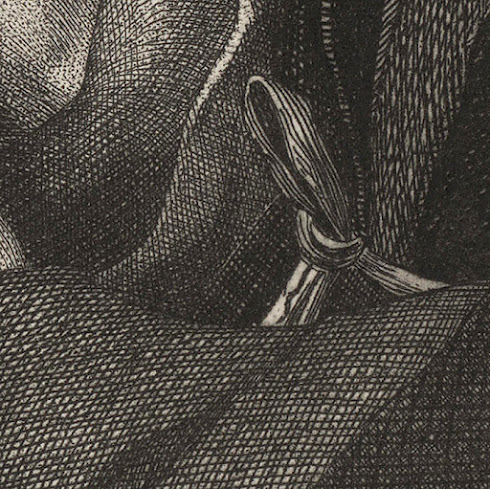
“Saint Francis of Assisi Kneeling in Prayer” (aka “Kneeling Monk”; “Moine Agenouillé” [Beraldi title]), 1849, after Francisco de Zurbarán’s (aka Francisco Zurbarán) (1598–1664) painting, “St Francis in Meditation”, originally exhibited in the Galerie Espagnole at the Louvre between 1838 to 1848, and now the National Gallery, London, published in Paris by the Chalcographie du Louvre (fl.1797–) and dry-stamped with the seal of the Louvre Chalcographie.

Engraving and etching on heavy cream wove paper with wide margins and the dry stamp of the Louvre Chalcographie.

Size: (sheet) 63.3 x 45.3 cm; (plate [soft impression]) 37.6? x 24.6? cm; (image borderline) 30.3.3 x 20.8 cm.

Inscribed in plate below the image borderline: “Zurbaran — Alp Masson.”

Dry-stamped with the seal of the Chalcographie du Louvre below the platemark at centre.

Beraldi 5 (Henri Beraldi 1889, “Les Graveurs du XIXe Siècle: LAEMLEIN–MÉCOU”, Paris, Librairie L. Conquet, vol. IX, p. 247, cat. no. 5 [Estampes diverses: Moine agenouillé]).

The National Gallery (London) offers the following insights regarding Francisco de Zurbarán’s painting, “St Francis in Meditation”: “This is one of Zurbarán’s most austere and intensely spiritual works. Saint Francis is shown kneeling in fervent prayer, his clasped hands cradling a skull. Shadow obscures his face, giving us only a glimpse of his features. He wears the robe of the Franciscans, the religious order he founded in the thirteenth century; its patched and tattered appearance draws to mind the vow of poverty taken by all the order’s members.

Zurbarán shows the saint in a moment of profound contemplation, his head tilted upwards and mouth slightly open. The skull is a symbol of death and refers to Christ’s crucifixion. Meditation on death was particularly favoured by the Jesuits, and saints contemplating skulls are frequently found in seventeenth-century Italian and Spanish painting” (https://www.nationalgallery.org.uk/paintings/francisco-de-zurbaran-saint-francis-in-meditation-1).

Condition: a richly inked and near faultless impression with generously wide margins in a near pristine condition with no tears, holes, folds, abrasions, significant stains or foxing.

I am selling this superb translation of Zurbarán’s painting into an engraving—note how Masson has captured the heavy folds of the monk’s long robe (habit) and hood compared to the thinner material of his upper tunic, and how the treatment of these materials contrast with the suggestion of stiffness in the rendering his cord belt (cincture)—for AU$308 (currently US$205.87/EUR186.27/GBP163.97 at the time of this listing, but please be aware that purchases are made in Australian dollars only as this is my currency) including postage and handling to anywhere in the world, but not (of course) any import duties/taxes imposed by some countries.

If you are interested in purchasing this absolutely stunning engraving (with etching), please contact me (oz_jim@printsandprinciples.com) and I will send you a PayPal invoice to make the payment easy.

This print has been sold


Sunday, 28 August 2022

Charles Daubigny’s etching, “Le Buisson”, 1855, after Jacob van Ruisdael

Charles Daubigny (aka Charles François Daubigny) (1817–1878)

“Le Buisson” (aka “The Scrub”; “The Thicket”), 1855, after Jacob van Ruisdael 's (aka Jacob van Ruysdael; Jacob Isaaksz van Ruisdael; Jacob de Goyer) (1628/9–1682) painting, 1647/53, “Dune Landscape near Haarlem” (aka "Le Buisson ou Chemin dans les dunes harlemoises"), in the Musée du Louvre, Paris (inv. no. 1819) (see: https://en.wikipedia.org/wiki/Dune_Landscape_near_Haarlem), commissioned and published by the Chalcographie du Louvre.

Etching and drypoint printed in brown (bistre) ink on heavy cream wove paper, blind-stamped with the Chalcographie du Louvre seal.

Size: (sheet) 51 x 54.8 cm; (plate) 42.9 x 47.8 cm; (image borderline) 32.8 x 39.7 cm.

Lettered in plate below the image borderline: (left) “J.Ruisdael pinxit.”; (centre) “LE BUISSON.”; “C. Daubigny sculp 1855/ CHALCOGRAPHIE DU MUSÉE DU LOUVRE.”

Blind-stamped on lower margin with the seal of “Chalcographie du Louvre, Musées Nationaux”.

State v (of v) with the addition of the title and publication details of the Chalcographie.

Melot D87 S5 (Michel Melot 1978, “Graphic Art of the Pre-Impressionists”, New York, Harry N. Abrams, p, 278, cat. no. D 87 [5]); Delteil 87 (“Le Peintre-Graveur Illustré (XIXe et XXe siècles”).

Michel Melot (1978) offers the following insights about the background events in Daubigny’s life leading up to the execution of this plate:

“The Comte de Nieuwerkerke, Director-General of Museums, assigned Daubigny to translate the “Thicket” of Ruysdael, which no engraver had as yet taken on. Daubigny acquitted himself of this delicate task very honourably. He rendered the masterpiece of the Master of Haarlem not as a clever manipulator of cross-hatchings but as a painter interpreting another painter and penetrating directly into the feeling of the model. He attained the power of effect of the original and at the same time expressed its austere melancholy. Following the example of the masters of the great periods of engraving, Daubigny executed his plate with a great simplicity of means. He made use of scarcely anything more than etching and drypoint. He made little or no use of the burin. He rigorously ruled out the use of roulettes and other mechanical means. He made up for them by energetic and repeated [acid] baths; his work owes its frankness and vigour to those audacities in acid-biting, but the drawing was to some extent made heavier, and the plate lost by this a little of the spirit and finesse that distinguish the ‘first state’ of pure etching so sought after by print lovers” (p. 278; see also the original text written that Melot translated written by Comte de Nieuwerkerke’s secretary, Frédéric Henriet, in 1875 in “C. Daubigny et son oeuvre gravé, eaux fortes et bois inédits”, Paris, A. Lévy, pp. 60–61: https://archive.org/details/cdaubignyetsonu00henrgoog/page/n80/mode/2up).

The Metropolitan Museum of Art offers a description of this print: https://www.metmuseum.org/art/collection/search/336989.

Condition: a richly inked and well-printed impression with generous margins as published in near pristine condition.

I am selling this large and richly worked etching executed by one of the luminaries of the Barbizon School after a painting by one of the major landscape artists of the 1600s, for the total cost of AU$289 (currently US$199.21/EUR199.71/GBP169.82 at the time of this listing) including postage and handling to anywhere in the world, but not (of course) any import duties/taxes imposed by some countries.

If you are interested in superb etching which is one of Daubigny’s major commissioned works by the Louvre—interestingly, the print was commissioned by the director of the Louvre at a time when artists’ reproductive rights were being challenged by a proposed law in 1841 designed to prevent “the government of conducting itself like an owner and publisher with money taken from the Civil List” (see Frédéric Henriet [1875] p. 60)—please contact me (oz_jim@printsandprinciples.com) and I will send you a PayPal invoice to make the payment easy.

This print has been sold


Monday, 22 August 2022

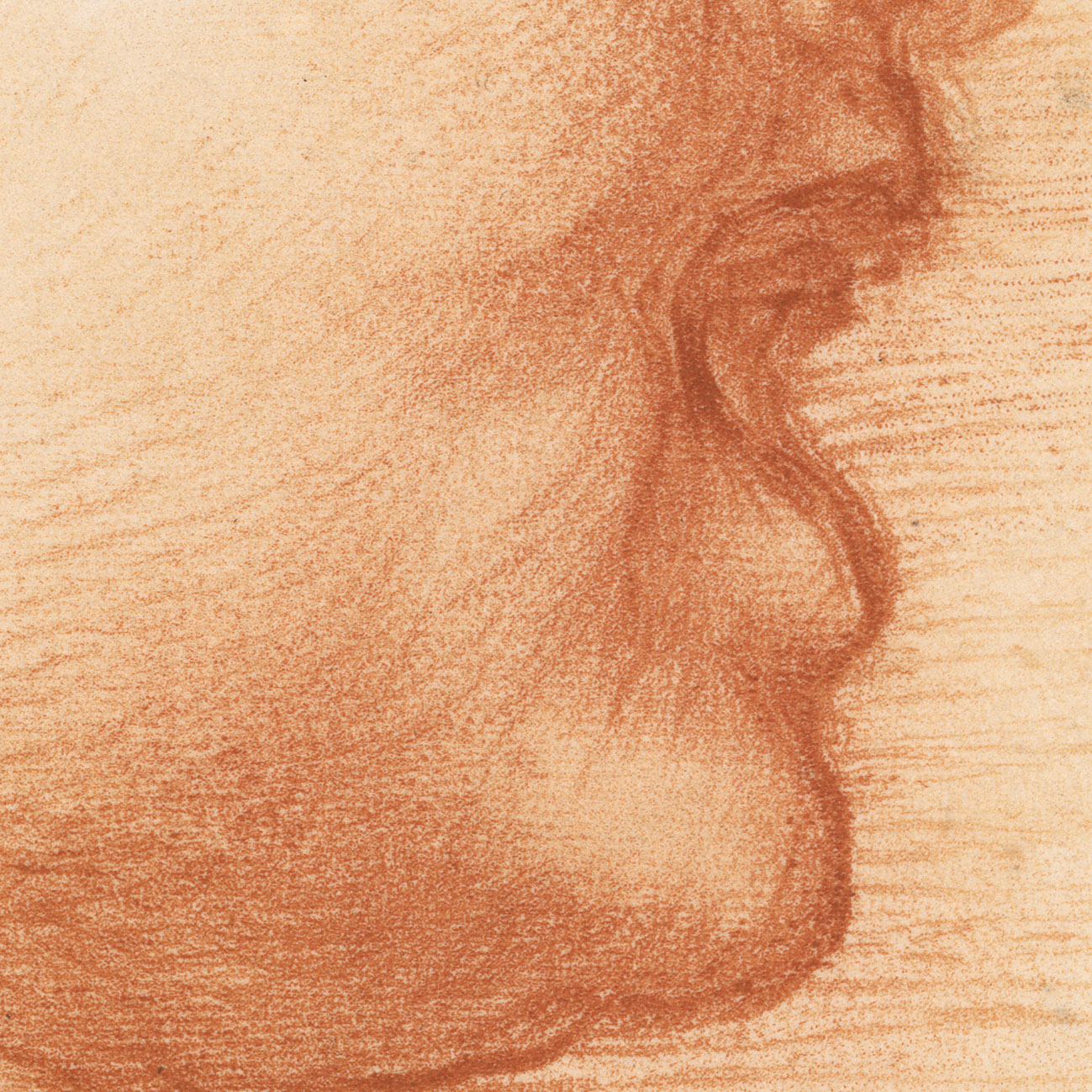
Ferdinand Lefman’s crayon-manner engraving, “Head of a Laughing Child”, 1852, after Andrea del Sarto

Ferdinand Lefman (1827? –1890)

“Head of a Laughing Child”, 1852, engraving in the crayon-manner after the preparatory drawing (Louvre inv. no. 1717) by Andrea del Sarto (aka Andrea Vannucchi) (1586–1530) for the painting, “Charity” (Louvre inv. no. 712), commissioned by Francis I in 1518. This impression is published by the Chalcographie du Louvre (aka Chalcographie Impériale) (1797–) and has the blind-stamp of the Chalcographie certifying that the impression was taken from the original plate in the collection of the Louvre.

Crayon-manner engraving printed in a yellow-orange ink on laid paper with the blind-stamp “Chalcographie Musèe du Louvre” at lower centre.

Size: (sheet) 39.6 x 27.7 cm; (plate) 33 x 26 cm; (image borderline) 25.4 x 19 cm.

Lettered in plate below the image borderline: “ANDREA DEL SARTO. del.”; “MUSÉE du LOUVRE.”; (right) “F. LEFMAN. sc.”

IFF 10 (Inventaire du Fonds Français: Bibliothèque Nationale, Département des Estampes)

The British Museum offers descriptions of this print: https://www.britishmuseum.org/collection/object/P_1928-0204-9 & https://www.britishmuseum.org/collection/object/P_1854-1111-93.

Condition: a well-printed impression in excellent condition with no tears, holes, folds, significant stains or signs of handling.

I am selling this delicately luminous engraving executed in the crayon-manner—a technique usually involving roulettes and other tools that leave lines of dots simulating the grittiness of crayon or chalk lines)—for AU$223 (currently US$153.84/EUR153.38/GBP130.13 at the time of this listing) including postage and handling to anywhere in the world, but not (of course) any import duties/taxes imposed by some countries.

If you are interested in purchasing this very beautiful engraving after a drawing by the great 16th century master, Andrea del Sarto, please contact me (oz_jim@printsandprinciples.com) and I will send you a PayPal invoice to make the payment easy.


Friday, 26 November 2021

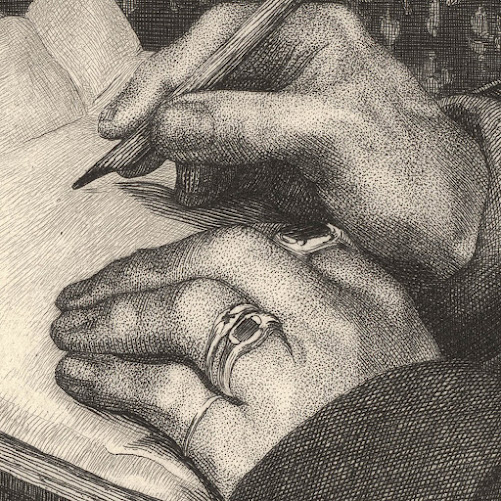
Félix Bracquemond’s etching, “Didier Erasme”, 1863, after Holbein


Félix Bracquemond (aka Joseph Auguste Félix Bracquemond) (1833–1914)

Didier Erasme” (aka “Érasme” [BM title]), 1863, after Hans Holbein the Younger’s (1497/8–1543) “Portrait of Erasmus”, 1523, in the collection of the Musée du Louvre, Paris (inv.no.1345) (see https://commons.wikimedia.org/wiki/File:Hans_Holbein_d._J._-_Erasmus_-_Louvre.jpg), printed by the Chalcographie du Louvre.

Etching on cream chine collé on heavy wove paper with huge margins and blind-stamped with the seal of the Chalcographie du Louvre.

Size: (sheet) 69.3 x 55 cm; (plate) 32.1 x 25.5 cm; (chine collé) 30.6 x 23.9 cm; (image borderline) 24.8 x 19.9 cm.

Lettered in plate below the image borderline: (left) “H. Holbein pint.”; (centre) “CHALCOGRAPHIE DU LOUVRE/ Didier Erasme”; (right) “Bracquemond sc.”

Blind-stamped with the seal of the Chalcographie du Louvre at lower centre.

Final state xi (of xi) with the name of the Chalcographie du Louvre added (Beraldi offers descriptions of the previous ten states).

Beraldi 39 (Henri Béraldi 1885, “Les Graveurs du XIXe Siècle: Guide de l'Amateur d'Estampes Modernes: Bracquemond”, vol. III, Paris, Librairie L Conquet, p. 27, cat. no. 39 [Portraits]).

The British Museum offers a description of this print: https://www.britishmuseum.org/collection/object/P_1923-0714-155.

Condition: a richly inked and mostly well-printed impression—note that there are ink dots on Érasme’s chin—with enormous margins. There are minor tears and marks in the margin edges, otherwise this is a simply magnificent impression with no major issues.

I am selling this masterwork of etching after Holbein’s famous portrait of the Dutch philosopher and Catholic theologian, Erasmus (aka Desiderius Erasmus Roterodamus), for AU$257 in total (currently US$183.13/EUR161.77/GBP137.29 at the time of posting this listing) including postage and handling to anywhere in the world (but not, of course, any import duties/taxes imposed by some countries).

If you are interested in purchasing this marvellous (and huge) etching—note that I have listed an etching by Henri Lefort reproducing the same painting by Holbein that may be interesting to compare—please contact me (oz_jim@printsandprinciples.com) and I will send you a PayPal invoice to make the payment easy.

This print has been sold