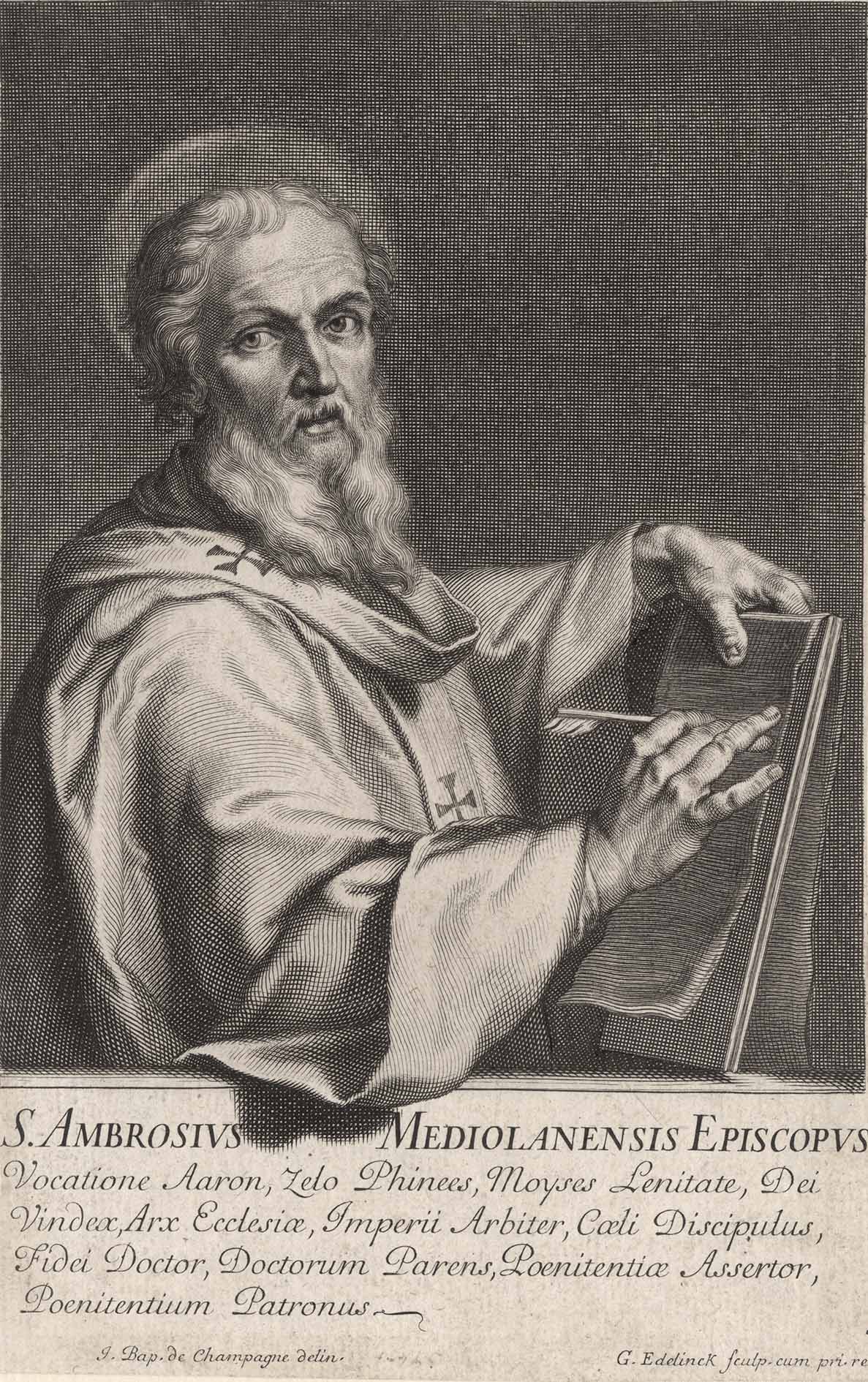
Gérard Edelinck (1640–1707)
“Portrait of the Painter and Printmaker,
Hendrick Goltzius” (aka “Henricus Goltius Pictor et
Sculptor” as lettered on plate), c1700.
Note that the date inscribed on the
plate (below the title at lower right), “1617”, is not the execution date of
the engraving. Instead, this is the year of Goltzius’ death. The execution date
for the print given by both the BM and the Rijksmuseum is the considerable window of time between
1652 and 1707, but I believe that the date may be narrowed down to between 1695
to Edelinck’s death in 1707, because the artist received the title of “Chevalier
Romain” (“Eques Romanus”) inscribed on the plate, in 1695. Consequently I
propose the circa date of 1700.
Engraving on laid paper trimmed to the
image borderline and backed with a support sheet.
Size: (sheet) 31.6 x 20.3 cm
Inscribed on plate at lower centre: “henricus
Goltius Pictor et Sculptor. / 1617 / G.
Edelinck Eques Romanus Sculpsit.”
State iii (of iii) See the same state shown in
the impression held by the BM [1910,0610.138] and the Rijksmuseum [RP-P-BI-7518]
but this impression is stronger than those held by these museums suggesting that this is from an early printing even if it is from the same state).
Robert-Dumesnil 216-3(3) (A.P.F.
Robert-Dumesnil et [G. Duplessis] 1835–71, “Le peintre-graveur français, ou
catalogue raisonné des estampes gravées par les peintres et les dessinateurs de
l'école française: ouvrage faisant suite au peintre-graveur de Bartsch”, Paris, p. 267, cat. no. 216); Muller II 1853
undescribed (Frederik Muller 1853, “Beschrijvende catalogus van 7000 Portretten,
van Nederlanders”, Amsterdam); van Someren 1888 undescribed (Jan Frederik van
Someren 1888, “Beschriivende catalogus van Gegraveerde Portretten van
Nederlanders. Vervolg op Frederik Mullers catalogus van 7000 Portretten van
Nederlanders”, 3 vols., Amsterdam, Frederik Muller & Co); Wurzbach 1906-11
216 (Alfred von Wurzbach 1906, “Niederländisches Künstler-Lexikon”, 3 vols,
Vienna-Leipzig, Verlag von Halm und Goldmann)
The British Museum offers the following
description of this print:
“Portrait of Hendrik Goltzius,
half-length, directed to the left, head slightly turned to face the viewer,
wearing a cap, holding a picture Engraving”
See also the Rijksmuseum’s description
of the print:
(transl.) “Portrait of the painter,
printmaker Hendrick Goltzius (1558-1617). Pictured half-length, with machined
copperplate in hands.”
Condition: a rare and near faultless early impression
showing no sign of wear to the printing plate, trimmed near the image
borderline with thread margins and backed with a support sheet of archival (millennium
quality) washi paper. The print is in near pristine condition for its
considerable age (i.e. there are no tears, holes, creases, abrasions, stains or
foxing).
I am selling this richly inked and
well-printed, near faultless rare impression of an early engraving portraying the
almost legendary printmaker, Hendrick Goltzius, holding his printing plate for
the engraving executed in 1596, “St Jerome” (after Jacopo Negretti), for the total cost of AU$239 (currently US$177.95/EUR152.68/GBP134.15
at the time of posting this print) including postage and handling to anywhere
in the world (but not, of course, any import duties/taxes imposed by some
countries).
If you are interested in purchasing this
historically important masterpiece of engraving showing one of the greatest
printmakers of the 17th century, please contact me
(oz_jim@printsandprinciples.com) and I will send you a PayPal invoice to make
the payment easy.
This print has been sold
For those who may be unfamiliar
with the engravings of Edelinck, the following brief summary of this master
engraver of the 17th century extracted from the Encyclopædia Britannica (11th
ed.) and cited in Wikipedia (https://en.wikipedia.org/wiki/G%C3%A9rard_Edelinck)
is a fine start:
“Edelinck stands above and apart from
his predecessors and contemporaries in that he excelled, not in some one
respect, but in all respects, that while one engraver attained excellence in
correct form, and another in rendering light and shade, and others in giving
color to their prints and the texture of surfaces, he, as supreme master of the
burin, possessed and displayed all these separate qualities, in so complete a
harmony that the eye is not attracted by any one of them in particular, but
rests in the satisfying whole.”
From a personal viewpoint, the way that
Edelinck is able to show that Goltzius’ beard is white (or a light grey) is
such an amazing feat that I need to doff my hat—not that I wear a hat. What
makes this rendering of the beard exceptional is that the beard is convincingly
white despite Edelinck rendering every single whisker, even those in the high-lights
(as opposed to the more usual practice of only showing individual whiskers in
the half-lights and never in full light if a beard is white).
Another signifier that Edelinck is a
master of portraiture is the way that the artist uses different shaped
highlights on the eyes—a square on the left eye and an oval on the right eye—to
draw the attention to Goltzius’ divided way of looking at the viewer. From my
personal response when looking at both eyes, the eye on the left (i.e. Goltzius’
right eye) seems to be assessing me analytically while the eye on the right
(i.e. Goltzius’ left eye) seems gazing softly in an empathetic way.
Beyond the subtleties of Edelinck’s treatment of this portrait, the stylistic ingredient that makes this portrait
shine—literally—is the theatrical play of light and shade contrasts which reveal his
leaning to the Northern Mannerist style of the time and the advent of Baroque
age.